

LongCat Video ✓
AI-powered long-form video processing and analysis.
Verdict
A quick read before you dig into the full page.
- Best if
- AI-powered long-form video processing and analysis
- Skip if
- Complex installation process
- Pick this when
- Multitasking video generation
Considering freebeat AI instead? Compare side by side
Overview
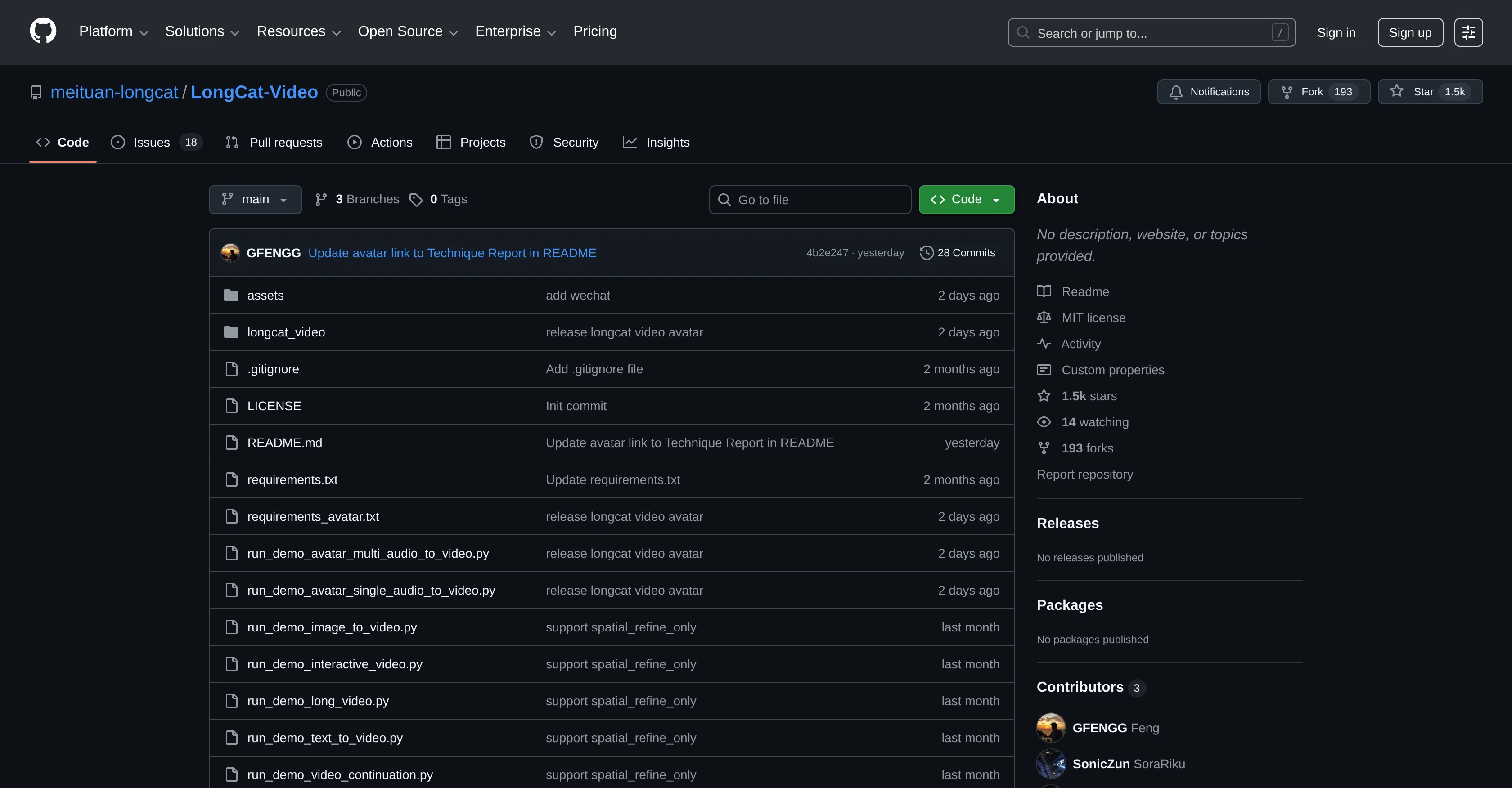
LongCat-Video is a comprehensive video generation model by meituan-longcat developed on GitHub. This AI tool is designed to execute multiple tasks within one video generation framework, including converting text to video, translating images into video sequences, and generating continuation in videos.
One key feature of LongCat-Video is in its ability to efficiently create long videos without reduction in quality or noticeable color drifting. It follows a coarse-to-fine generation strategy along both temporal and spatial axes to enhance efficiency, especially at high resolutions.
The model was trained through Group Relative Policy Optimization, which incorporates multi-reward Real-life High Fidelity (RLHF) and ensures competitive performance across multiple metrics when compared to leading open-source and commercial video generation models.
Moreover, the AI model has launched an expressive audio-driven character animation feature, known as LongCat-Video-Avatar, which can natively handle tasks such as Audio-Text-to-Video conversion, Audio-Text-Image-to-Video generation, and Video Continuation.
It offers seamless compatibility for both single-stream and multi-stream audio inputs. All technical reports, inference code, model weights, and project pages related to LongCat-Video are openly available on GitHub.
Access & connections
Where you can use LongCat Video, and what it plugs into.
Platforms
Integrations
Capabilities
What this tool accepts, produces, and is strongest at.
Input
- Image
- Text
- Audio
Output
- Video
Highlights
- Open Source
- Local
Supported features
- Open Source
- Video Avatars
- Video Generation
- Lip Sync
- Runs Locally
Pros & cons
Pros
- Multitasking video generation
- Text-to-video conversion
- Image-to-video translation
- Video continuation creation
- Efficient long video creation
- No quality reduction
- Decreased color drifting
- Coarse-to-fine generation strategy
Show 14 more
- Temporal and spatial efficiency
- High resolution capability
- Group Relative Policy Optimization
- Real-life High Fidelity
- Expressive audio-driven animation
- Audio-Text-to-Video conversion
- Audio-Text-Image-to-Video generation
- Single-stream audio compatibility
- Multi-stream audio compatibility
- Open-source GitHub project
- Inference code provided
- Model weights accessible
- Performance comparability
- High fidelity across metrics
Cons
- Complex installation process
- Requires specific CUDA version
- No model for xformers
- Execution requires specific python version
- Potential synchronization issues (audio-driven feature)
- Prompt requirements for more natural movements
- Repeated actions mitigation limitations
- Super resolution only up to 720P
Show 2 more
- Requires equal-length audio clips for dual-audio mode
- Efficiency enhanced only at high resolutions
Compare alternatives
Similar tools in the catalog — with a clear reason to open each one.

freebeat AI ✓
FreemiumTurn Music & Ideas into Viral Videos In One Click
Why look Offers a public API
Full comparison
MagicLight ✓
FreemiumTransform text into captivating videos instantly.
Free + from $8.4/mo
Full comparison



Seedance ✓
FreemiumMulti-shot video generation from text and image.
Why look Stronger for image work
Full comparisonReleases 1
FAQ 12
What is the aim of LongCat-Video?
How does LongCat-Video convert text to video?
What does LongCat-Video's feature of translating images into video sequences entail?
How does LongCat-Video generate continuation in videos?
Can LongCat-Video maintain video quality for long videos?
What is LongCat-Video's coarse-to-fine generation strategy?
How was LongCat-Video trained?
What is the function of the Group Relative Policy Optimization?
Why does LongCat-Video use Real-life High Fidelity in its training?
How does LongCat-Video compare to other video generation models?
What is the LongCat-Video-Avatar feature?
What tasks can be handled natively by the LongCat-Video-Avatar feature?
Related tools
Recommended

Pika Labs ✓
FreemiumTurn text into stunning videos effortlessly.

Wan Video ✓
UnknownAI creative platform that lowers creative barriers.

GetLyricVideo AI ✓
Free TrialCreate AI-powered music videos from songs in minutes.

CodeRabbit ✓
Free TrialEnhanced code review for improved workflow and quality.

ElevenLabs ✓
FreemiumCreate lifelike AI voices for compelling storytelling.

Veo ✓
PaidGenerate high-quality, cinematic videos with AI.