

Analytics Model ✓
Turn data into expert insights instantly.
Verdict
A quick read before you dig into the full page.
- Best if
- Turn data into expert insights instantly
- Skip if
- Limited customization for visualizations
- Pick this when
- Conversational interface
Considering Grapha AI instead? Compare side by side
Overview
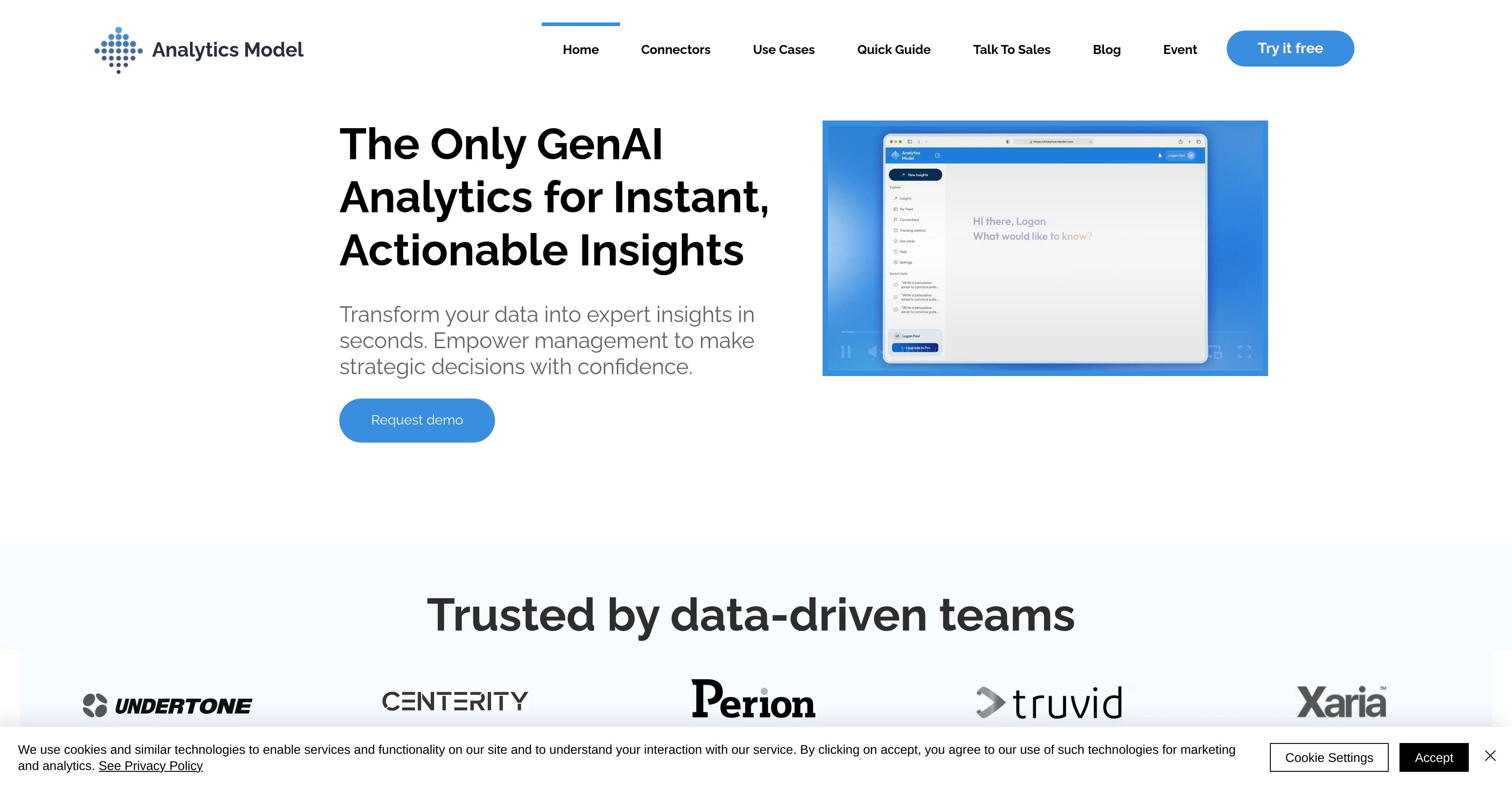
Analytics Model is an AI-driven analytics platform designed to generate insights from data through a conversational interface. This tool aims to transform complex data into actionable insights to facilitate informed decision-making.
User interactions are made via natural language, allowing users to ask any question about their data and receive real-time responses in a more intuitive and articulate manner.
In addition to question-answering, the platform also enables the creation of visually compelling data visualizations with a variety of chart types, styles, and designs.
It integrates with over 500 data sources to provide a comprehensive view of your data in one unified platform, simplifying the integration process and unlocking the full potential of your business insights.
Embedding the AI analytics solution into other platforms is also supported, enhancing user experiences by delivering advanced analytical capabilities within a user's existing environment.
The use cases for Analytics Model range from calculating customer Lifetime Value (LTV) and analyzing sales performance to tracking SEO performance and mapping customer journeys.
A comprehensive help center offers guidance on integrations, troubleshooting, and other platform features.
Access & connections
Where you can use Analytics Model.
Platforms
Capabilities
What this tool accepts, produces, and is strongest at.
Input
- Tabular
- Text
Output
- Tabular
- Text
- Image
Supported features
- Data Analysis
Pros & cons
Pros
- Conversational interface
- Real-time insights
- Variety of data visualizations
- 500+ data source integrations
- Analytics embedding support
- Diverse use cases
- Comprehensive help center
- Supports natural language processing
Show 41 more
- Sales performance analysis
- Customer journey mapping
- SEO performance tracking
- Customer LTV calculation
- Supports Big Data
- Flexible visualization options
- Personalized actionable insights
- Enables data-driven decision making
- User-friendly analytics
- Marketing performance tracking
- Instant expert insights
- Complex data transformation
- Seamless data integration
- Unified data platform
- Integrates with cloud services
- Visual appealing data presentations
- Supports scientific inquiry
- Product value enhancement
- Database connectors available
- LTV Cohort Analysis
- Market Basket Analysis
- Handles large datasets
- Conversational data interaction
- Visually appealing interface
- Tailored business needs
- Advanced analytical capabilities
- High customer engagement
- Trusted by data-driven teams
- Streamlined data processes
- Transform data into insights
- Seamless platform integration
- Informed decision-making facilitation
- Business insight unlock
- Data source connection guide
- Visualization customization
- Advanced analytics exploration
- Operational efficiency improvement
- Business process transformation
- SaaS platform integration
- Data workflow integration
- Productivity maximization
Cons
- Limited language comprehension
- Overwhelming for new users
- Limited customization for visualizations
- No offline mode
- Risk of misinterpreting data
- No multi-language support
- Potential compatibility issues
- Data privacy concerns
Show 1 more
- May be resource-intensive
Compare alternatives
Similar tools in the catalog — with a clear reason to open each one.

Grapha AI ✓
PaidUncover hidden trends and patterns in your data effortlessly.
from $150
Full comparison
DataSquirrel ✓
FreemiumData cleaning & visualization for insights gained.
Why look Higher community rating
Full comparison
Breadcrumb ✓
FreemiumAutomate data work and reporting with AI Agents. No data|coding skills required.
Why look Better fit for coding
Full comparison
Anomaly AI ✓
FreemiumAI data analysis workspace for business datasets and reports.
Free + from $25/mo
Full comparison

ChartPixel ✓
FreemiumAI-assisted graphs and insights in 30 seconds!
Why look Offers a public API
Full comparisonReleases 1
FAQ 12
What is Analytics Model?
How does Analytics Model use AI to generate insights from data?
Can you ask any type of question in natural language to Analytics Model?
How real-time are the responses from Analytics Model?
What types of data visualizations can Analytics Model create?
What types of data sources can integrate with Analytics Model?
Can Analytics Model be embedded into other platforms?
What are some use cases of Analytics Model?
How can Analytics Model help with calculating customer LTV?
How does Analytics Model analyze sales performance?
What is the role of Analytics Model in tracking SEO performance?
How does Analytics Model support decision making processes?
Related tools
Recommended

ChatGPT ✓
FreemiumAsk anything, create anything, and move from idea to action.

TurboScribe ✓
Freemium🎯 3 free transcripts every day. 🔥 Unlimited transcription starting at $10/mo.

Automateed ✓
Free TrialCreate eBooks effortlessly with Automateed, the AI-powered writing tool.

Kin - Personal AI Advisors ✓
FreePrivacy-first & designed your for mind, and life at work

Notis ✓
Free TrialThe first WhatsApp assistant that runs on your ChatGPT and Claude subscriptions

ElevenLabs ✓
FreemiumCreate lifelike AI voices for compelling storytelling.