

Celp
AI-driven unit tests with contextual understanding
Verdict
A quick read before you dig into the full page.
- Best if
- AI-driven unit tests with contextual understanding
- Skip if
- Potentially high learning curve
- Pick this when
- Designed for Typescript Node.js
Considering CaseIt instead? Compare side by side
Overview
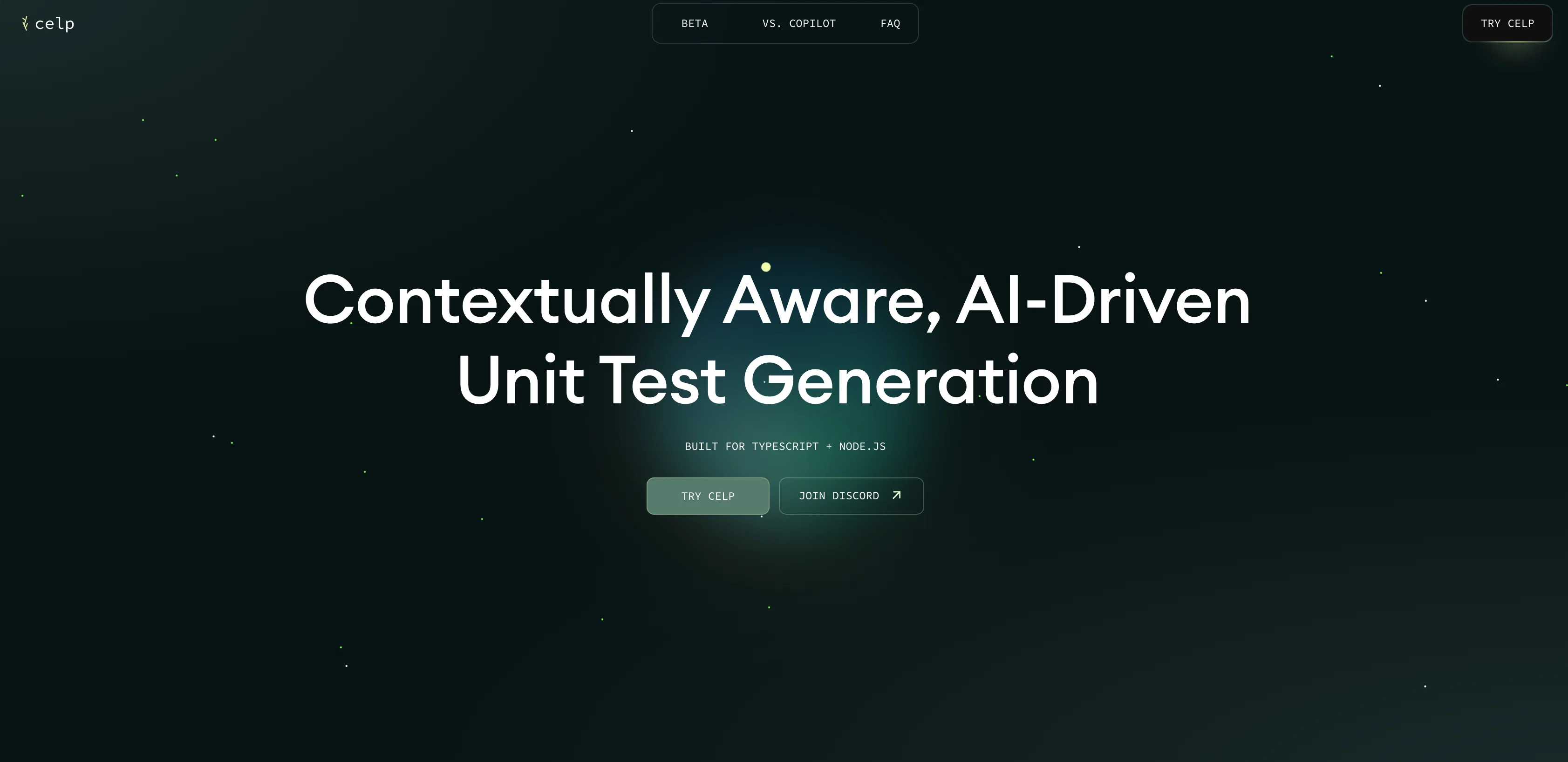
Celp is an artificial intelligence-driven unit test generation tool primarily designed for Typescript Node.js projects. Leveraging agentic design principles, Celp comprehensively scrutinizes your codebase with an intent to facilitate optimal code coverage.
Its primary objective revolves around providing efficiency and ensuring code stability. Let's say goodbye to unnecessary time losses, for Celp is designed to save you time while also maintaining the robustness of your code.
One of the distinctive features of the tool is that it is contextually aware. It intelligently parses code through the implementation of Abstract Syntax Trees (ASTs) and intermediary AI prompting mechanisms.
This approach helps in capturing only the necessary information from your codebase, thereby adding to its efficiency. With Celp in place, the generation of unit tests is no longer a mundane task and it aids in minimizing the occurrence of code errors simultaneously.
Access & connections
Where you can use Celp.
Platforms
Capabilities
What this tool accepts, produces, and is strongest at.
Input
- Code
Output
- Code
Supported features
- QA Automation
Pros & cons
Pros
- Designed for Typescript Node.js
- Agentic design principles
- Contextually aware
- Intelligently parses code
- Abstract Syntax Trees (ASTs)
- Saves time
- Optimal code coverage
- Code stability
Show 11 more
- Automatically runs tests
- Automatically resolves tests
- Writes type-safe code
- Generates unit tests
- Minimizes code errors
- Efficient information capturing
- Learns with use
- Reuses existing code
- Reduces unnecessary information
- Scrutinizes entire codebase
- Maintains code robustness
Cons
- Only for Typescript Node.js projects
- No detailed cost information
- Implementation specifics unclear
- No trial version mentioned
- Unclear code privacy policy
- Limited language support
- No explicit cross-platform support
- Potentially high learning curve
Compare alternatives
Similar tools in the catalog.

Releases 1
FAQ 12
What is the primary objective of Celp?
How does Celp ensure optimal code coverage?
What is the meaning of Celp being contextually aware?
How can Celp save my project's time?
What is the role of Abstract Syntax Trees (ASTs) in Celp's functionality?
What are agentic design principles in the context of Celp?
How does Celp contribute to code stability?
Is Celp specifically designed for Typescript Node.js projects?
Does Celp have the ability to reduce code errors?
What makes Celp's unit test generation process efficient?
How does Celp's artificial intelligence contribute to its functionality?
What does 'intermediary AI prompting mechanisms' mean in terms of Celp?
Related tools
Recommended

UXsniff ✓
FreemiumUX Change Intelligence for what changed and what mattered

DiagramGPT by Eraser ✓
FreemiumGenerated engineering diagrams.

Canny ✓
FreemiumCanny: Organize feature requests and prioritize your roadmap.

Sivi AI Designer ✓
FreeAI-powered multilingual design in minutes.

Writingmate ✓
PaidAll the best AI models in one place

Keel Studio ✓
UnknownBuild production backends in minutes from prompts.