
Point·E ✓
Synthesize 3D models with point cloud diffusion
Verdict
A quick read before you dig into the full page.
- Best if
- Synthesize 3D models with point cloud diffusion
- Skip if
- Diffusion algorithm may be complex
- Pick this when
- GitHub Actions
Considering Luma AI instead? Compare side by side
Overview
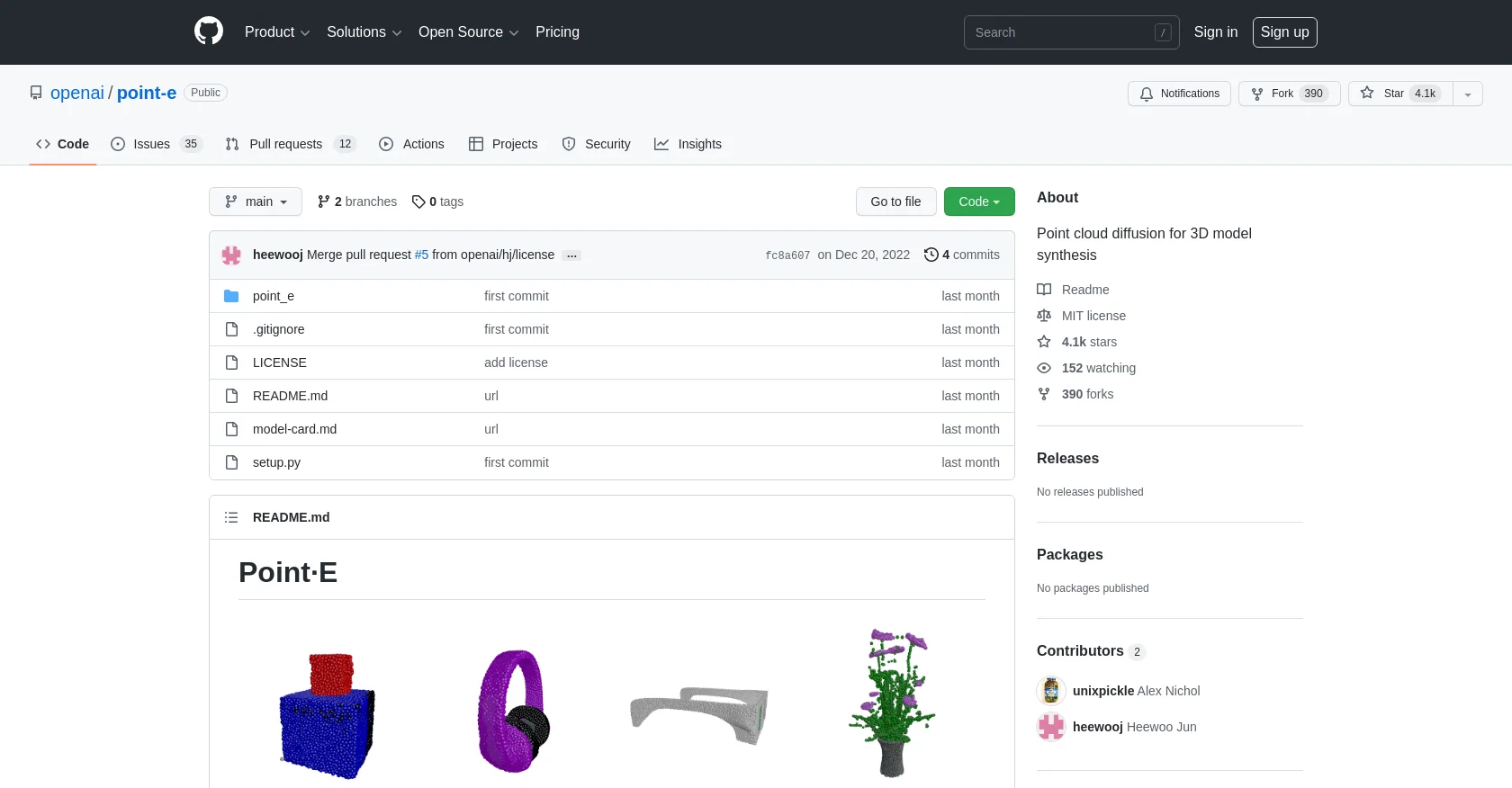
OpenAI's Point-E is an AI tool for synthesizing 3D models from point clouds. It uses a diffusion algorithm to transform point clouds into 3D models and is designed to create detailed, realistic models.
Point-E is available as an open source project on GitHub and is released under the MIT license. It uses a variety of tools and packages, such as GitHub Actions and Codespaces, to automate workflows and create instant development environments.
It also features a variety of features, such as code review and issues tracking, to help ensure high quality and efficient code. Point-E also includes a model-card for describing the model used for synthesis and a setup.py for installing the package.
To use Point-E, users can clone the repository via HTTPS, GitHub CLI or SVN, and launch GitHub Desktop, Xcode or Visual Studio Code to get started. It can then be used to generate 3D models from complex point clouds, with the output being highly realistic and detailed.
Access & connections
Where you can use Point·E, and what it plugs into.
Platforms
Integrations
Capabilities
What this tool accepts, produces, and is strongest at.
Input
- Image
- Text
Output
- 3D
Pros & cons
Pros
- Open source
- MIT license
- GitHub Actions
- Automated workflows
- Code review
- Issue tracking
- Instant development environments
- Highly detailed models
Show 18 more
- Realistic 3D output
- Model-card for descriptive synthesis
- Setup.py for package installation
- Multiple repository cloning methods
- Detailed README.md
- Includes examples
- Diffusion algorithm
- Python based
- Jupyter notebook compatible
- Issue and pull request tracking
- Active community with contributors
- Integrated with GitHub desktop
- Supports Xcode and Visual Studio Code
- Detailed model metadata
- Codebase version control
- Downloadable 3D examples
- High project popularity (4.1k stars)
- Active community (389 forks)
Cons
- Diffusion algorithm may be complex
- Detailed environment setup required
- Some features limited in quality
- Requires knowledge of GitHub
- May over-complicate simpler tasks
- Depends on external packages
- Realism of models may vary
- No clear update schedule
Show 2 more
- Reliant on specific dev environments
- Only Python and Jupyter supported
Compare alternatives
Similar tools in the catalog — with a clear reason to open each one.






Alpha3D ✓
Free TrialTransform 2D images into 3D assets with AI
Free + from $0.99/mo
Full comparisonReleases 1
FAQ 12
What is Point-E?
How does Point-E synthesize 3D models from point clouds?
How to install and setup Point-E?
What algorithms does Point-E use?
What tools and packages does Point-E use?
How can I track issues in Point-E?
What is the role of a diffusion algorithm in Point-E?
What are the applications of Point-E in 3D modeling?
How can I clone the Point-E repository?
How do I use Point-E to generate 3D models from complex point clouds?
How is the MIT license associated with Point-E?
How detailed are the 3D models synthesized by Point-E?
Related tools
Recommended

Recraft ✓
FreemiumGenerate vector art and 3D images effortlessly

VenturusAI ✓
FreemiumBusiness idea analysis and reporting.

Userpersona ✓
FreeGenerate ideal customer profiles from product descriptions.

Stable Diffusion ✓
FreemiumUnleash humanity's potential with generative AI

Aito Image - Text to Image ✓
FreemiumTransforming text into art with AI.
Ebsynth
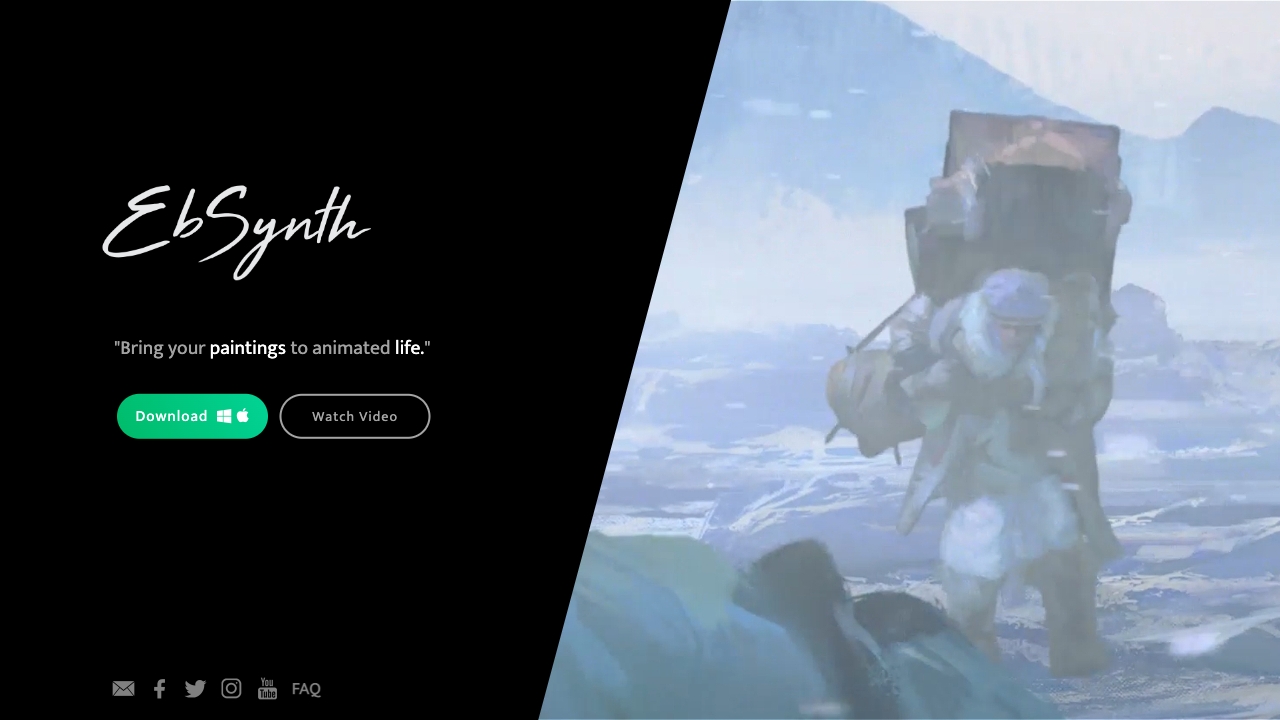
UnknownEbSynth animates footage using styled keyframes, ideal for hand-drawn animations.