

Kombai ✓
Your AI Design Engineer
Free + from $20/mo
Verdict
A quick read before you dig into the full page.
- Best if
- Your AI Design Engineer
- Skip if
- You need enterprise SLAs or a fully managed team plan right away
- Pick this when
- Freemium · Free + from $20/mo
Considering Cursor instead? Compare side by side
Overview
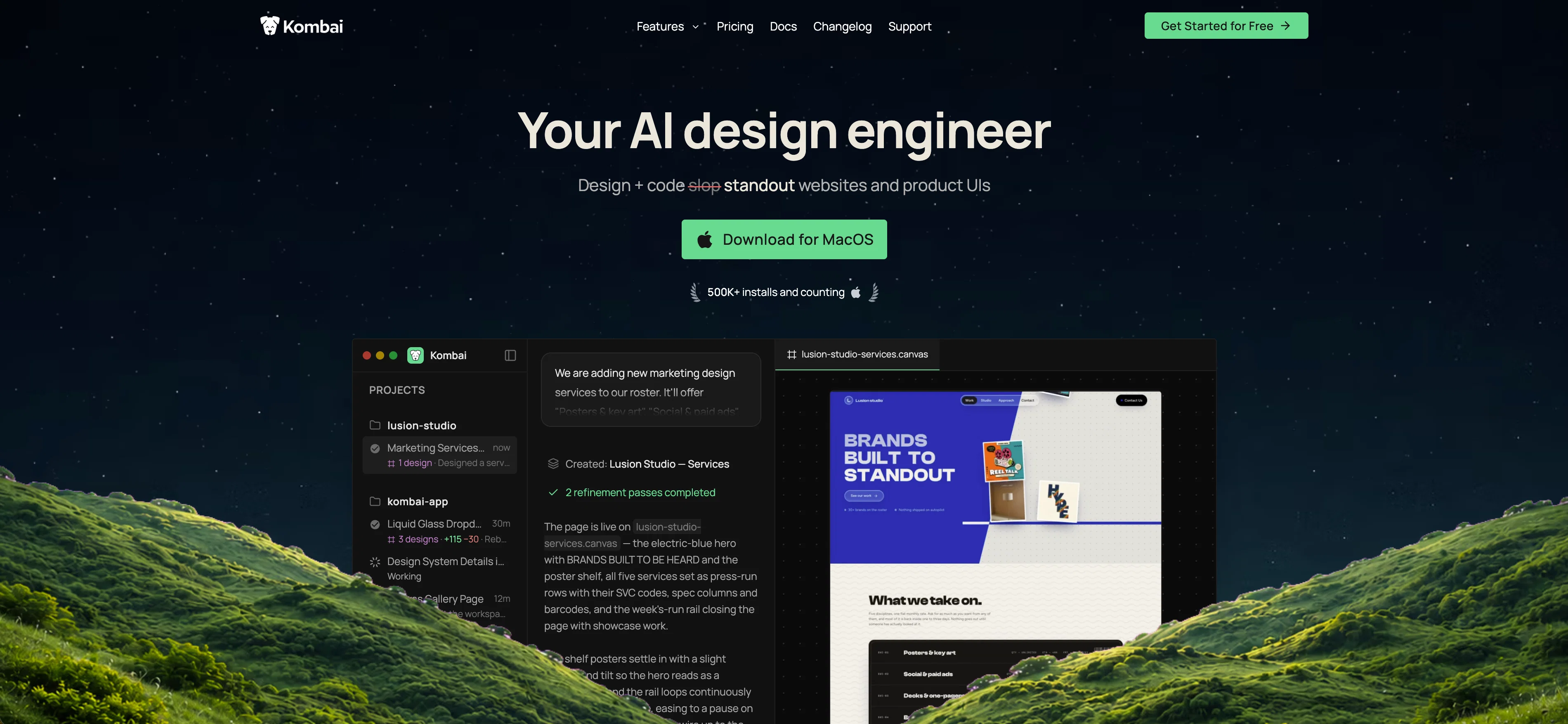
It combines creative design capabilities with frontend engineering expertise, helping you explore layouts, generate visual assets, apply design systems, and directly edit elements such as text, spacing, styles, and structure.
Kombai also understands your existing codebase, allowing it to reuse components, design tokens, hooks, types, packages, and Storybook assets while generating production-ready code.
With Kombai Browser, you can select elements directly from the live product, request visual or functional changes, inspect browser data, and automatically test user flows.
By keeping design, code, and browser preview in sync, Kombai reduces handoffs and context switching, helping teams move from idea to polished, production-ready frontend faster.
Access & connections
Where you can use Kombai, and what it plugs into.
Platforms
Integrations
Capabilities
What this tool accepts, produces, and is strongest at.
Input
- Code
- Image
- Text
Output
- Code
- Video
- Text
- Image
Highlights
- SOTA
- Agents
- Local
Supported features
- Agents
- Runs Locally
Compare alternatives
Similar tools in the catalog — with a clear reason to open each one.


OnSpace.AI - No Code App Builder ✓
FreemiumBuild Apps with AI, No Code
Free + from $20/mo
Full comparison
Kilo Code ✓
Free TrialAI-powered coding assistant for VS Code
Why look Typically cheaper
Full comparison
Github Copilot ✓
FreemiumAI-powered coding assistant for faster development
Why look Typically cheaper
Full comparison
CodingFleet ✓
FreemiumAI wizard transforms instructions into code snippets.
Why look Typically cheaper
Full comparison
Releases 1
FAQ 12
What is Kombai?
How does Kombai convert Figma designs into front-end code?
What kinds of designs can Kombai handle?
Does Kombai support CSS for flex without hardcoded dimensions?
Can Kombai generate JavaScript code?
Does Kombai convert form elements into functional components?
Why doesn't Kombai require tags, names, or grouped design elements?
How does Kombai emulate the inferences made by developers?
Does Kombai support React as a frontend framework?
How long did it take to develop Kombai?
Can Kombai handle higher order concepts like loops and conditions in code generation?
What kind of models does Kombai use for interpreting UI designs?
Related tools
Recommended

Studio Design ✓
FreemiumBuild stunning websites with creative freedom, no code required.

Codeium ✓
FreemiumAI-powered code completion for 20+ languages

LearningStudioAI ✓
Free TrialAI-powered authoring tool for effortless online course creation.

VenturusAI ✓
FreemiumBusiness idea analysis and reporting.

Stratup.ai ✓
FreemiumInnovative idea generation for businesses.

Agentgpt ✓
FreemiumDeploy autonomous AI Agents effortlessly in your browser.