

Gemini Robotics ✓
Multimodal AI for next-generation helpful robots.
Verdict
A quick read before you dig into the full page.
- Best if
- Multimodal AI for next-generation helpful robots
- Skip if
- Focused on advanced uses, not beginner-friendly
- Pick this when
- Develops embodied reasoning in robots
Considering Dobb-E instead? Compare side by side
Overview
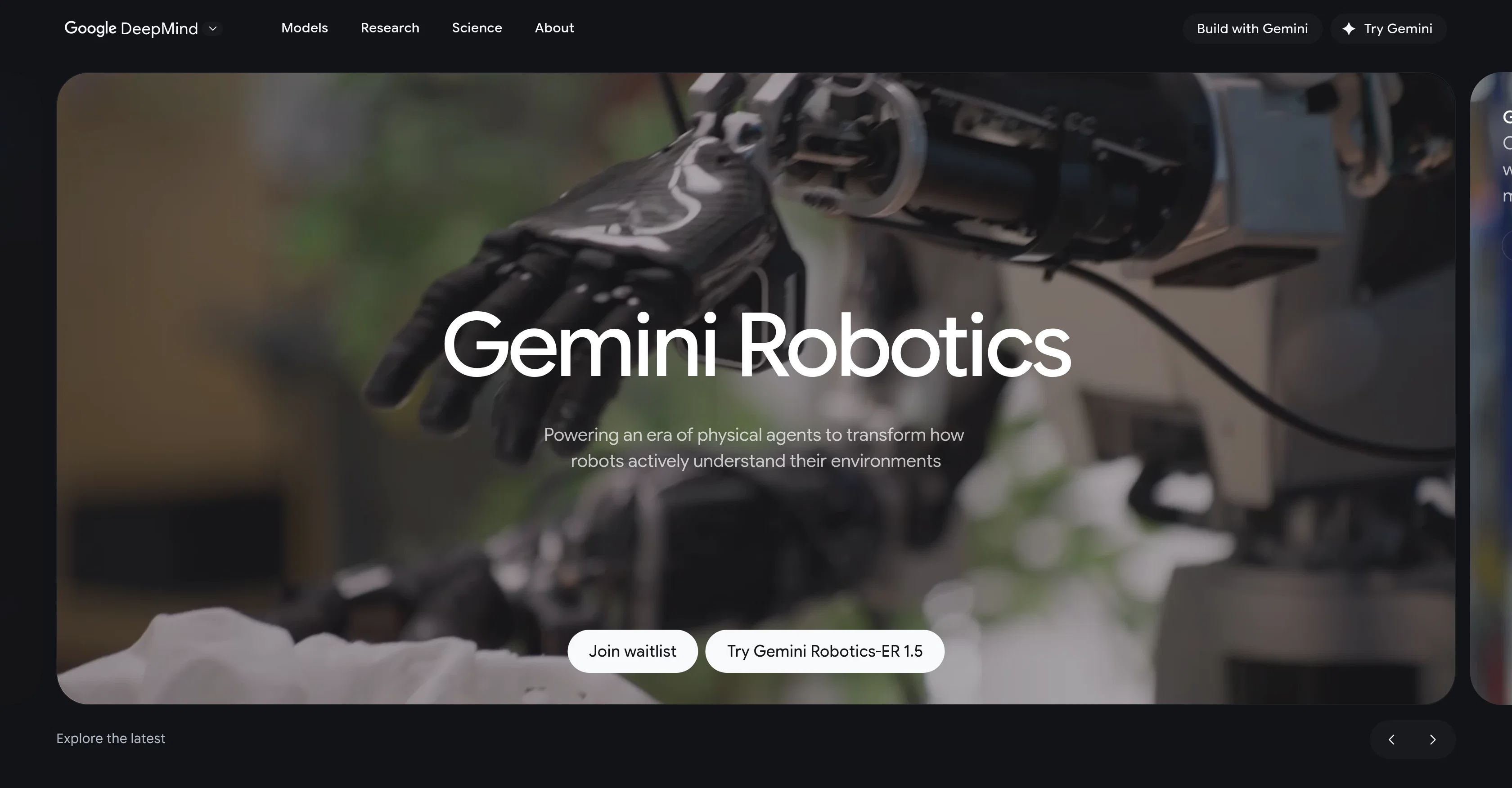
Gemini Robotics is an AI system designed by Google DeepMind. It leverages advanced AI technology to enhance the capabilities of robots in a broad range of applications.
The goal of Gemini Robotics is to transform the current standards of robotic understanding, making them more receptive to their environment. Central to this is the unique 'vision-language-action' model, which enables the robot to convert visual data and instructions into physical actions to execute specific tasks.This AI tool is particularly geared towards developing embodied reasoning in robots.
This enables them to understand their physical surroundings better, plan effectively, and make logical decisions based on their inputs. By creating an intersection between machine learning models and physical world understanding, Gemini Robotics aims to create more functional and adaptable robotic systems.In addition to these capabilities, the tool is part of Google DeepMind's commitment to responsible AI development.
This commitment ensures that as the tool evolves, important ethical considerations will be built into its design and use, aligning with the overarching mission to harness AI technology for beneficial and sustainable applications.
Access & connections
Where you can use Gemini Robotics, and what it plugs into.
Platforms
Integrations
Capabilities
What this tool accepts, produces, and is strongest at.
Input
- Text
Output
- Audio
- Video
- 3D
- Text
- Image
- AR/VR
Highlights
- Waitlist
Pros & cons
Pros
- Develops embodied reasoning in robots
- Unique 'vision-language-action' model
- Transforms robotic understanding standards
- Improves robots' physical surroundings comprehension
- Enhances robots' planning efficiency
- Makes robotic decision-making logical
- Intersection of machine learning and physical understanding
- Creates more functional robotic systems
Show 21 more
- Design includes ethical considerations
- Enables adaptable robotic systems
- Enhances robot task execution
- Improves robotic environment receptiveness
- Prepares robots for sustainable applications
- Enhances capabilities of broad range robots
- Uses state-of-the-art embodied reasoning model
- Designed for next-gen helpful robots
- Generates interactive worlds
- Reason through multi-step complex tasks
- Capable of responding to text, images, audio, video
- Improves quality of robot actions
- Can adapt to changes in environment
- Enables fine motor skills and precise manipulation
- Adapts to diverse array of robot forms
- Transfers learned motions across robots of varying sizes
- Takes a dual-model approach
- Partnership with Apptronik for next-gen humanoid robots
- Model optimized to run locally on robotic devices
- SDK available for robotics developers
- Collaboration with trusted testers for future guidance
Cons
- No offline capabilities
- Specific to robotics
- No user customization
- Lack of transparency in decision-making
- Reliant on vision-language-action model
- Limited to Google DeepMind ecosystem
- Possible bias in embodied reasoning
- Lack of user interface
Show 1 more
- Focused on advanced uses, not beginner-friendly
Compare alternatives
Similar tools in the catalog.


Jacobi Robotics ✓
UnknownProgram robot arms 10x faster with friendly APIs
No pricing
Full comparison
R Dog | Robot.com ✓
UnknownInteractive robot ads that stop crowds and spark conversations.
No pricing
Full comparison


Releases 1
Imported reviews 1
Good step toward robots taking natural instructions instead of scripted commands. the fine motor work in the demos looks solid. hard to judge properly with access this limited though.
FAQ 12
What is Gemini Robotics?
What makes Gemini Robotics unique when compared to other AI systems?
How does the 'vision-language-action' model of Gemini Robotics work?
What does 'embodied reasoning' mean in the context of Gemini Robotics?
In what ways does Gemini Robotics enhance the capabilities of robots in various applications?
How does Gemini Robotics contribute to Google DeepMind's commitment to responsible AI development?
How does Gemini Robotics help robots understand their environment and make logical decisions?
What are the ethical considerations built into the design and use of Gemini Robotics?
What types of tasks can Gemini Robotics help robots execute?
How does Gemini Robotics translate visual data and instructions into physical actions?
What potential applications does Gemini Robotics have in the field of robotics?
What are the benefits of Gemini Robotics' intercept between machine learning models and physical world understanding?
Related tools
Recommended

MagicSlides.app AI PPT Maker ✓
FreemiumCreate Stunning PPTs in Seconds with the AI PPT Maker

ChatGPT ✓
FreemiumAsk anything, create anything, and move from idea to action.

TheLibrarian.io ✓
Free TrialYour WhatsApp AI assistant for instant productivity.

Suno ✓
FreemiumMake music at the speed of your ideas.

Sensay ✓
Free TrialAI Offboarding that keeps knowledge inside your company.

CodeRabbit ✓
Free TrialEnhanced code review for improved workflow and quality.
More from this creator

Gemini ✓
FreemiumGemini: Google's most capable AI model yet

Google Imagen ✓
Free TrialTransform images with AI-powered creativity

Veo ✓
PaidGenerate high-quality, cinematic videos with AI.

Nano Banana ✓
FreemiumAI-powered image editing, faster than ever with Nano Banana.

AlphaGenome ✓
UnknownDecipher DNA function with DeepMind's genomics model.

Lyria ✓
FreeGenerate high fidelity music and audio