

Open Knowledge Maps ✓
Visualize research topics and discover scientific knowledge.
Verdict
A quick read before you dig into the full page.
- Best if
- Visualize research topics and discover scientific knowledge
- Skip if
- Limited integration options
- Pick this when
- Visualizes research topics
Considering Figmap instead? Compare side by side
Overview
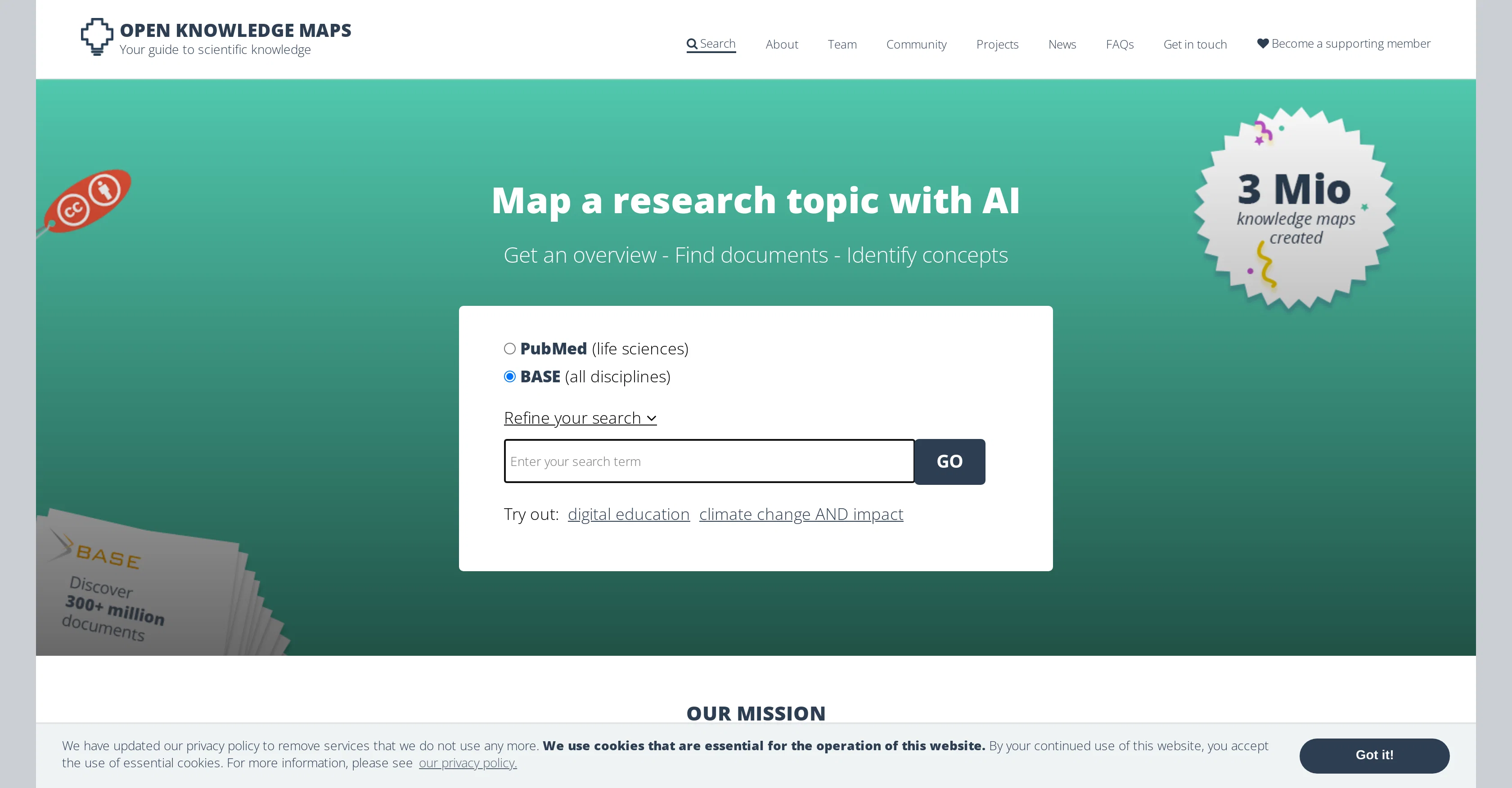
Open Knowledge Maps is an AI-based tool designed to enhance the visibility and accessibility of scientific knowledge for both science and society. It is available as a search engine for scientific literature, wherein users have the ability to visually map a research topic, discover relevant papers and distill key concepts.
Underpinned by the principles of open science, Open Knowledge Maps is a non-profit organization that aims to provide an inclusive, sustainable, and equitable infrastructure usable by a wide range of users.
The platform functions as more than a discovery tool for current existing knowledge; it is also an effort to collectively co-create a more robust platform for future scientific research and findings.
The software includes features that allow organizations to embed Open Knowledge Map components into their own discovery systems. This tool has been recognized for its vision in the field of discovery in open spaces, which propels its mission to revolutionize the way research findings are discovered and shared.
Access & connections
Where you can use Open Knowledge Maps.
Platforms
Capabilities
What this tool accepts, produces, and is strongest at.
Input
- Text
Output
- Text
Pros & cons
Pros
- Visualizes research topics
- Finds relevant papers
- Distills key concepts
- Open science principles
- Inclusive platform
- Sustainable research infrastructure
- Equitable usage
- For both science and society
Show 14 more
- Non-profit organization
- Co-creating platform with users
- Embeddable components in discovery systems
- Increased visibility of research
- Custom integrations available
- Charitable organization
- Collective funding effort
- User testimonies available
- Supporting members recognized
- Open source software
- Software hosted on Github
- Creative commons license
- Training materials provided
- Multiple contact channels
Cons
- Limited to scientific literature
- Dependent on external funding
- Non-customizable visualization
- No multi-language support
- Relies on community contributions
- Limited integration options
- Visualization may oversimplify concepts
- Potentially biased by funding organizations
Show 2 more
- Lack of usage analytics
- Open-source requires technical expertise
Compare alternatives
Similar tools in the catalog — with a clear reason to open each one.


Heptabase ✓
Free TrialMaster anything you learn with visual AI knowledge.
Free + from $11.99/mo
Full comparison
Knogra ✓
FreeChart the whole subject. One scene at a time.
Why look Offers a public API
Full comparison
PageVero ✓
FreemiumTurn webpages into a structured, source-linked knowledge base.
Free + from $20.00/mo
Full comparison

MindMapAny ✓
Free TrialTurn any content into a traceable mind map.
Why look Better for writing
Full comparisonReleases 1
FAQ 12
What is Open Knowledge Maps?
What are the main features of Open Knowledge Maps?
How does Open Knowledge Maps enhance the visibility and accessibility of scientific knowledge?
How does the visual mapping feature in Open Knowledge Maps work?
Can I use Open Knowledge Maps as a search engine for scientific literature?
What principles of open science are applied in Open Knowledge Maps?
Who can use Open Knowledge Maps?
How does Open Knowledge Maps aim to facilitate scientific research and findings?
How can organizations integrate Open Knowledge Maps into their own systems?
Is Open Knowledge Maps a non-profit organization?
What is Open Knowledge Maps' mission?
How does Open Knowledge Maps propose to improve the way research findings are discovered and shared?
Related tools
Recommended

Kin - Personal AI Advisors ✓
FreePrivacy-first & designed your for mind, and life at work

COACH ✓
FreeAI-powered career development platform built by career experts.
AI Mind Mapper ✓
FreeTransform PDFs into easy-to-digest mind maps.

Mindmap ✓
FreemiumVisualize ideas effortlessly with free mindmaps.

Humanize AI Text ✓
FreeTransform AI text into human-like content.

Thryve ✓
FreeYour free digital wellness therapist and coach