

Llamaindex ✓
Connect custom data to large language models
Free + from $50/mo
Verdict
A quick read before you dig into the full page.
- Best if
- Connect custom data to large language models
- Skip if
- Limited vector store providers
- Pick this when
- Connects custom data sources
Considering Defog instead? Compare side by side
Overview
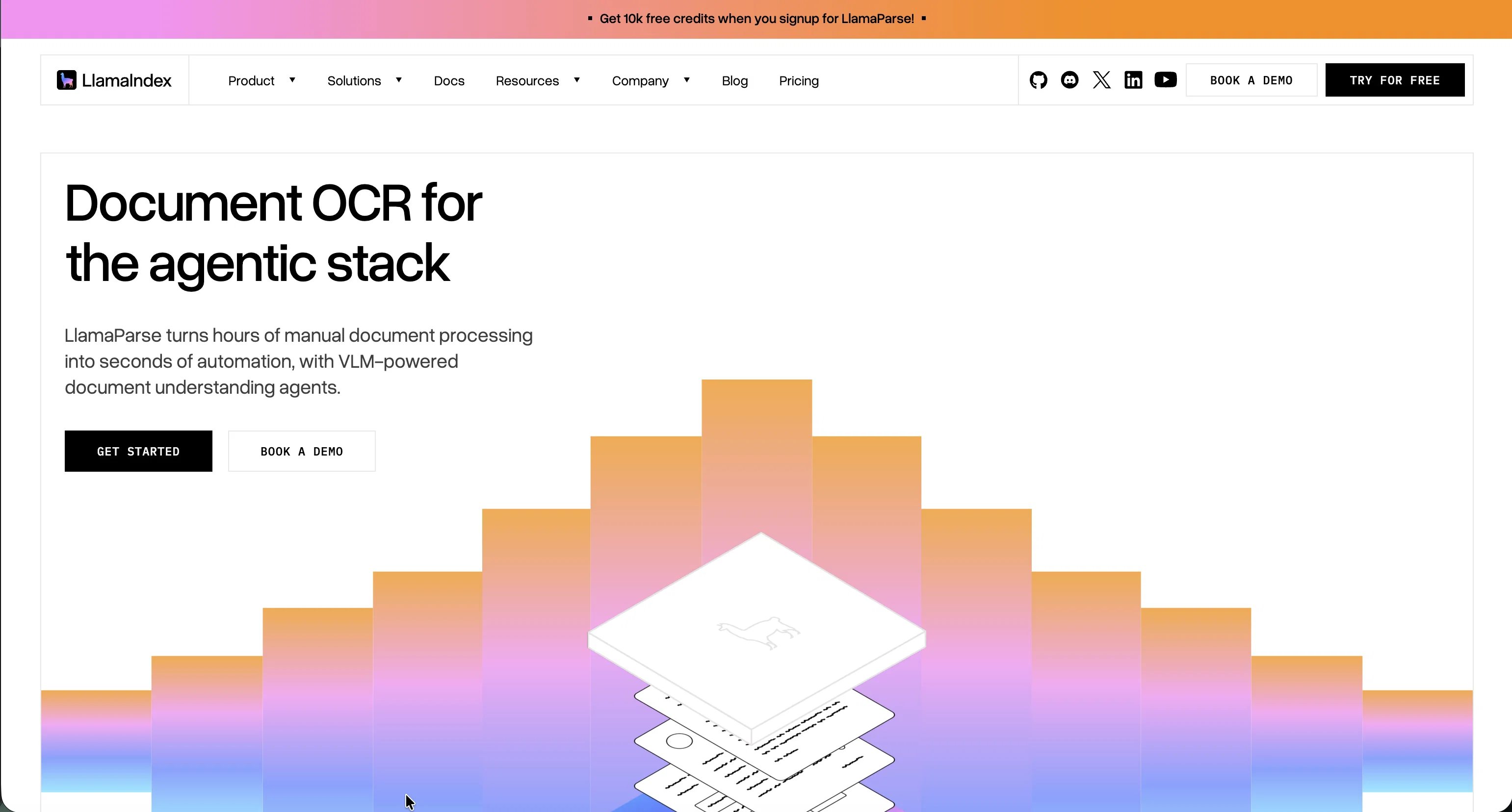
LlamaIndex is a data framework specifically designed for connecting custom data sources to large language models (LLMs). It offers a simple and flexible approach to integrate various types of data with LLM applications.
With LlamaIndex, users can connect their existing data sources and formats, including APIs, PDFs, documents, and SQL, to be utilized within LLM applications.
The tool provides data ingestion capabilities, allowing the storage and indexing of data for different use cases. Integration with downstream vector store and database providers is also supported.LlamaIndex stands out with its query interface, which allows users to input prompts and receive knowledge-augmented responses based on their data.
This feature enables the creation of powerful end-user applications such as document Q&A and data augmented chatbots. Additionally, LlamaIndex can be used to index knowledge bases and task lists, supporting the development of automated decision machines.The tool supports various types of data sources, including unstructured sources like documents, raw text files, PDFs, videos, and images.
It also seamlessly integrates structured data sources from Excel and SQL, as well as semi-structured data from APIs like Slack, Salesforce, and Notion.LlamaIndex provides several resources for users, including documentation, a Discord community, an official Twitter account, and a blog.
It is available on GitHub under the LlamaIndex repository, and related products such as LlamaIndex.TS, LlamaHub, and LlamaLab are also accessible. Users can unleash the power of LLMs over their data by leveraging the capabilities of LlamaIndex.
Access & connections
Where you can use Llamaindex, and what it plugs into.
Platforms
Integrations
Capabilities
What this tool accepts, produces, and is strongest at.
Input
- API
- Text
Output
- API
- Text
Highlights
- Agents
Supported features
- Agents
Pros & cons
Pros
- Connects custom data sources
- Supports large language models
- Flexible data integration
- Supports APIs, PDFs, documents, SQL
- Data ingestion capabilities
- Storage and indexing of data
- Integrated with vector store
- Integrated with database providers
Show 16 more
- Input prompts in query interface
- Knowledge-augmented responses
- Creates document Q&A applications
- Enables data augmented chatbots
- Can index knowledge bases
- Supports automated decision machines
- Integrates unstructured data sources
- Connects raw text files, videos, images
- Seamlessly integrates Excel, SQL
- Integrates semi-structured data APIs
- Community support via Discord
- Active Twitter account
- Blog updates
- Available on GitHub
- Related products accessible
- Supports task list indexing
Cons
- No dedicated customer support
- Restricted data ingestion capabilities
- Limited types of structured data
- No explicit security measures
- No data cleansing feature
- Limited vector store providers
- Unclear update frequency
- Exclusive reliance on GitHub
Show 2 more
- No multi-language support
- No information on scalability
Compare alternatives
Similar tools in the catalog — with a clear reason to open each one.


AskExcel ✓
Free TrialYour AI Excel assistant for effortless data analysis
Why look Typically cheaper
Full comparison

WrenAI ✓
Free TrialConnect LLMs to your data for explainable insights.
Free + from $99/mo
Full comparison

Releases 1
FAQ 12
What is LlamaIndex?
How does LlamaIndex connect with large language models?
What types of data sources can LlamaIndex support?
How does LlamaIndex handle data ingestion?
What types of integrations does LlamaIndex offer with downstream vector store and database providers?
What is the query interface in LlamaIndex?
How can I use the LlamaIndex query interface to receive knowledge-augmented responses?
How does LlamaIndex support the creation of document Q&A applications?
Can I use LlamaIndex to build data augmented chatbots?
How does LlamaIndex handle knowledge bases and task lists?
What are some examples of unstructured data sources that LlamaIndex can connect with?
Can LlamaIndex integrate with structured data sources like Excel and SQL?
Related tools
Recommended

VenturusAI ✓
FreemiumBusiness idea analysis and reporting.

Agentgpt ✓
FreemiumDeploy autonomous AI Agents effortlessly in your browser.

Recall ✓
FreemiumSummarize Anything, Forget Nothing!

HeyGen ✓
FreemiumCreate AI spokesperson videos from text

WriteHuman ✓
Free TrialUndetectable and private content generation.

IX Coach ✓
FreemiumInterdisciplinary life coaching for growth.