

Pentesting 2026 Rank: #2844
Escape.tech ✓
AI-powered pentesting that scales with your engineering.
Verdict
A quick read before you dig into the full page.
- Best if
- AI-powered pentesting that scales with your engineering
- Skip if
- Limited integration with existing security tools
- Pick this when
- Automated pentesting assessments
Considering HackerAI instead? Compare side by side
Overview
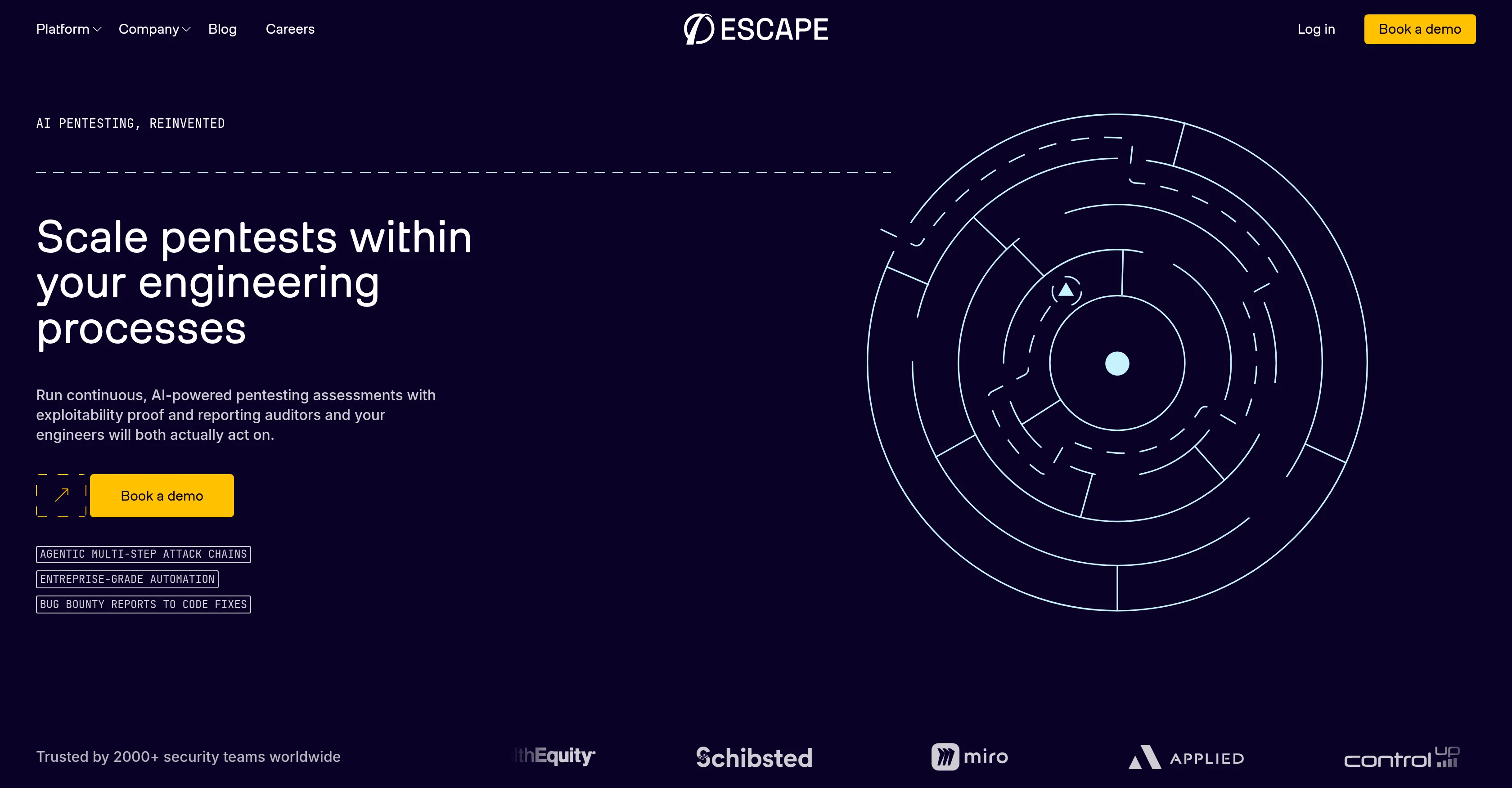
Escape is a platform that utilizes AI to power pentesting assessments. It aims to replace manual pentest and bug bounty programs with an automated solution that scales.
Escape provides attack surface management by discovering and validating the exposure of modern applications, APIs, and infrastructure from code to cloud.
It is designed to secure applications at the business logic level, helping to identify vulnerabilities before they reach production. The platform enables security teams to run continuous security assessments on every release cycle.
Escape also features the ability to convert bug bounty reports or manual pentest findings into automated regression tests that run on every build. This ensures that the same vulnerability does not reoccur and strengthens the overall security posture.
The platform also facilitates detailed reporting and visibility with minimal human input required. It allows for both public and private control with cloud and on-prem hybrid deployments, meaning assessments can be run on internal applications without the need to give external consultants or bug hunters access to your infrastructure.
Access & connections
Where you can use Escape.tech, and what it plugs into.
Platforms
Integrations
Capabilities
What this tool accepts, produces, and is strongest at.
Input
- API
- Text
Output
- API
- Text
Highlights
- Agents
- API
- MCP
Supported features
- Cybersecurity
- Agents
- API
- MCP
- Automation
- Integrations
Pros & cons
Pros
- Automated pentesting assessments
- Attack surface management
- Cloud to code validation
- Business logic level security
- Continuous security assessments
- Turns bug reports into automated tests
- Prevents vulnerability recurrence
- Detailed reporting and visibility
Show 17 more
- Public and private control
- Hybrid on-prem and cloud deployments
- Scale with engineering
- Saves hours on daily builds
- Agentic multi-step attack chains
- Vulnerability before production
- Budget line to quality gate
- Time-to-remediation reduction
- Automated regression tests
- Built-in automations and workflows
- No human for reporting
- Works seamlessly with current infra
- Supports modern frameworks
- Works with developer tools
- Multilingual support
- Business-logic-aware DAST
- Supports multiple pentest scenarios
Cons
- Lacks multi-language support
- No real-time vulnerability updates
- Not compatible with traditional pentesting tools
- No customization options for pentesting
- Undefined ROI tracking mechanism
- Limited integration with existing security tools
- No clear policy for false positives
- Absence of community or forum support
Show 2 more
- Non-transparent pricing model
- Might overlook unique application-specific vulnerabilities
Compare alternatives
Similar tools in the catalog — with a clear reason to open each one.

HackerAI ✓
UnknownAI assistant that automates penetration testing workflows.
Why look Higher community rating
Full comparison
ZeroThreat.ai ✓
FreemiumFastest AI-Powered AppSec & Automated Pentesting Platform
Free + from $100/mo
Full comparison



AISafe Labs ✓
FreemiumAI agents that assess your app with hacker expertise at machine speed.
Why look Higher community rating
Full comparisonReleases 1
FAQ 12
What is Escape?
How does Escape use AI in pentesting?
What is the role of Escape in attack surface management?
How can Escape automate bug bounty programs?
What is the purpose of automated regression tests in Escape?
Does Escape provide reporting and visibility?
Can Escape be used in both public and private setups?
How does Escape handle on-premises security?
How does Escape secure applications at the business logic level?
What are the benefits of continuous security assessments with Escape?
How does Escape fit into software release cycles?
Can Escape handle API security?
Related tools
Recommended

Securitybulldog ✓
UnknownAI-powered cybersecurity intel to speed up remediation.

Claude Security ✓
FreemiumAI that finds security vulnerabilities scanners miss.

Sec-Gemini ✓
UnknownReal-time cybersecurity knowledge and tools.

AI Security Gateway ✓
FreemiumAI Firewall & LLM Proxy — PII Redaction, Smart Routing, Budget Enforcement