
Edge Dance ✓
Create dance routines from music.
Verdict
A quick read before you dig into the full page.
- Best if
- Create dance routines from music
- Skip if
- Difficulty handling complex sequences
- Pick this when
- Generates high-quality choreographies
Considering BeatMotion instead? Compare side by side
Overview
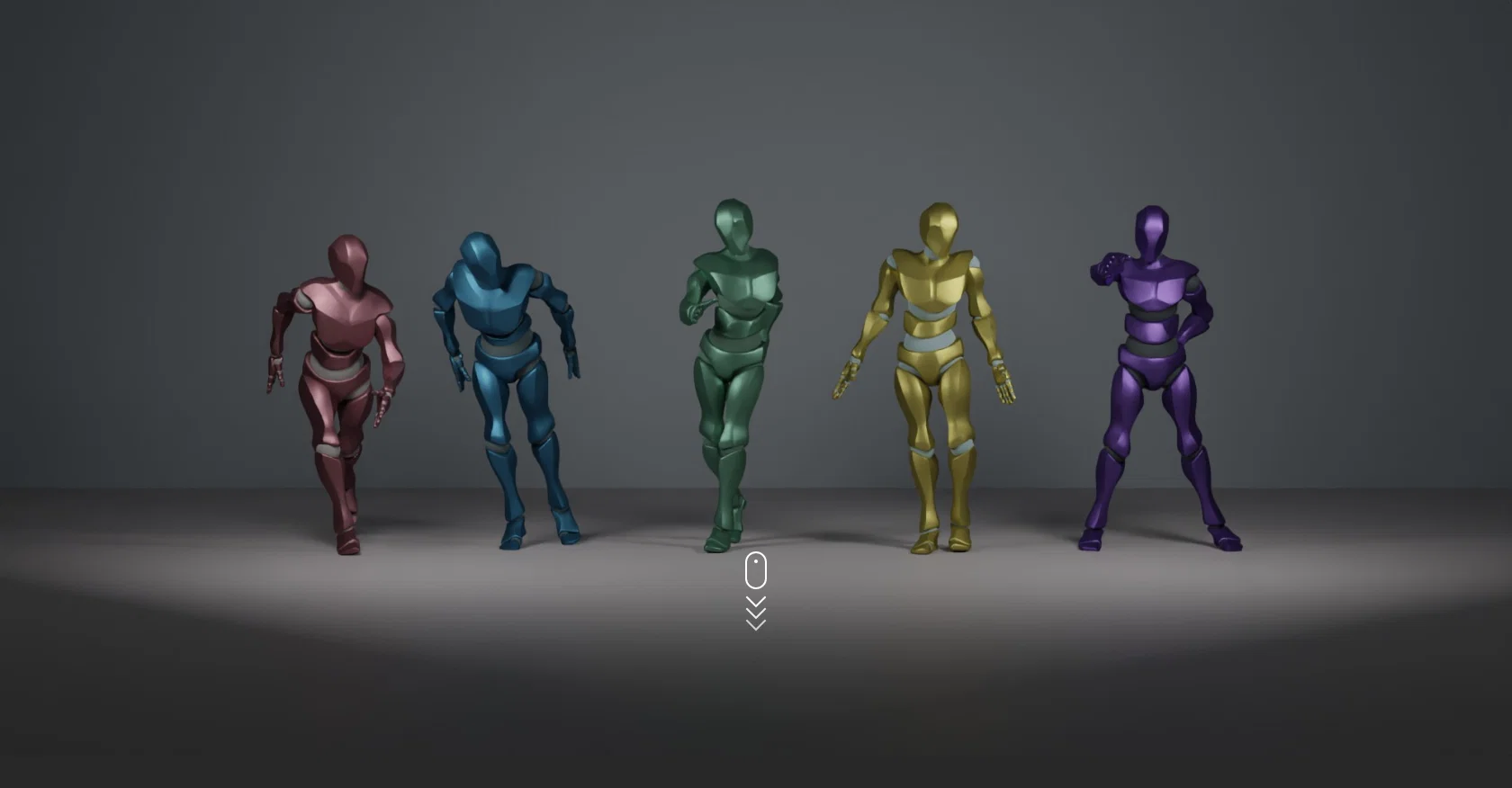
EDGE: Editable Dance Generation from Music is an AI tool that generates high-quality choreographies from music using music embeddings from the Jukebox model.
The tool works by encoding input music into embeddings using a frozen Jukebox model and then using a conditional diffusion model to map the music embeddings to a series of 5-second dance clips.
At inference time, temporal constraints are applied to batches of multiple clips to enforce temporal consistency before stitching them into an arbitrary-length full video.
The tool supports arbitrary spatial and temporal constraints, making it suitable for various end-user applications, including dances subject to joint-wise constraints, motion in-betweening, and dance continuation.
In addition, EDGE has a new Contact Consistency Loss that improves physical realism while keeping sliding intact and avoids unintentional foot sliding, ensuring that generated dances are physically plausible.
The tool has been trained with physical realism in mind and has been shown to outperform previous work, as indicated by human raters' strong preference for dances generated by EDGE.
Overall, EDGE: Editable Dance Generation from Music is a powerful AI tool suitable for generating high-quality choreographies from music, with potential applications in various industries, including entertainment and the arts.
Best for
Short scenarios where Edge Dance tends to shine.
-
Create dance routines from music.
Example outputs 1
Sample generations and before/after results for Edge Dance.
Access & connections
Where you can use Edge Dance.
Platforms
Pros & cons
Pros
- Generates high-quality choreographies
- Uses music embeddings
- Frozen Jukebox model encoding
- Uses conditional diffusion model
- Enforces temporal consistency
- Handles multiple 5-second clips
- Supports arbitrary-length full videos
- Arbitrary spatial and temporal constraints
Show 18 more
- Suitable for joint-wise constraints
- Useful for motion in-betweening
- Supports dance continuation
- New Contact Consistency Loss
- Improves physical realism
- Avoids unintentional foot sliding
- Physically plausible dance generation
- Outperforms previous work
- Highly rated by human raters
- Applications in entertainment industry
- Applications in arts industry
- Creates routines from unseen music
- Generates lower body from upper body
- Generates upper body from lower body
- Start and end with prespecified motions
- Trainable with specific motion
- Embeddings from Jukebox model
- Generates any length dances
Cons
- Requires trained Jukebox model
- Limited to 5-second clips
- Temporal consistency enforcement needed
- Heavy reliance on constraints
- Potential physical realism issues
- Loss of motion continuity
- Difficulty handling complex sequences
- Demanding computational resources
Show 2 more
- Possible foot sliding inaccuracies
- Limited end-user applications
Compare alternatives
Similar tools in the catalog.

BeatMotion ✓
Free TrialTurn text into songs and music videos instantly.
Free + from $24/mo
Full comparison
Viyou AI Dance Generator ✓
PaidTurn images or text into AI dance videos.
from $12.99
Full comparison
Music Video Generator ✓
PaidTurn your song into a cinematic, lyrics-driven music video
from $2
Full comparisonPeople also view
Tools that often show up alongside Edge Dance in collections and comparisons.
Viyou AI Dance Generator ✓
PaidTurn images or text into AI dance videos.
Music Video Generator ✓
PaidTurn your song into a cinematic, lyrics-driven music video

LumiMusic ✓
Free TrialCreate any music you can imagine.

Heart Melody ✓
FreemiumTurn your story into a personalized AI song.

Enliven Music ✓
FreemiumTransform text prompts into professional-quality songs instantly.
BeatMotion ✓
Free TrialTurn text into songs and music videos instantly.

Kin - Personal AI Advisors ✓
FreePrivacy-first & designed your for mind, and life at work

FineVoice ✓
Free TrialMake the Perfect Voice for Any Moment
Releases 1
Imported reviews 2
how do i use the website?
how do i use the website?
FAQ 12
What is EDGE: Editable Dance Generation from Music?
How does EDGE generate choreographies from music?
What is the Jukebox model used for in EDGE?
How does the conditional diffusion model in EDGE work?
What are the temporal constraints applied by EDGE?
What kind of constraints can EDGE support?
What is the Contact Consistency Loss in EDGE?
How does EDGE ensure the physical realism of the generated dances?
In what applications can EDGE be used?
What are the joint-wise constraints in EDGE?
Can EDGE generate dances for any length of music?
How does EDGE perform compared to previous works?
Related tools
Recommended

Musicfy ✓
PaidCreate AI covers of your favorite songs instantly.

Mix Check Studio ✓
FreemiumAI-driven insights to perfect your music mixes.

Recall ✓
FreemiumSummarize Anything, Forget Nothing!

Suno ✓
FreemiumMake music at the speed of your ideas.

Soundful ✓
FreemiumUnlimited music creation for monetization purposes.

Stratup.ai ✓
FreemiumInnovative idea generation for businesses.