
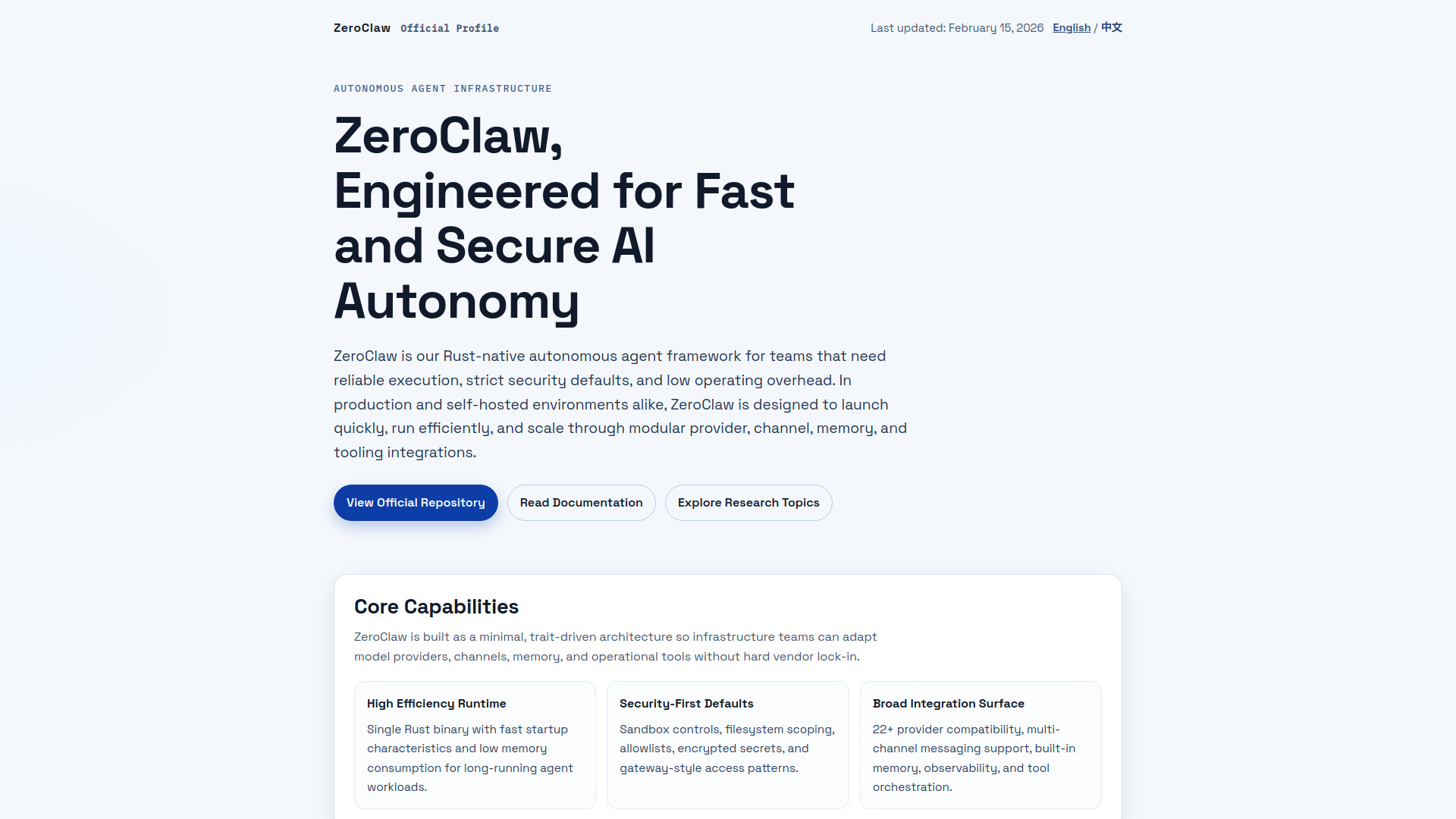
zeroclaw
A lightweight, secure, Rust-native autonomous AI agent framework for high-efficiency automation.
Verdict
A quick read before you dig into the full page.
- Best if
- A lightweight, secure, Rust-native autonomous AI agent framework for high-efficiency automation
- Skip if
- You need a free plan with no credit card
- Pick this when
- A lightweight, secure, Rust-native autonomous AI agent framework for high-efficiency automation
Overview
ZeroClaw is a lightweight, security-first autonomous AI agent framework built in Rust. It is designed for high-efficiency performance with fast startup times, low memory consumption, and production-grade extensibility. Using a trait-driven architecture, it allows infrastructure teams to swap model providers, messaging channels, and memory systems without vendor lock-in. ZeroClaw emphasizes security with built-in sandbox controls, filesystem scoping, and encrypted secrets. It supports over 22 provider integrations, including OpenAI-compatible endpoints and local model workflows like Ollama, making it suitable for both server-class hardware and low-power devices like Raspberry Pi.
Access & connections
Where you can use zeroclaw, and what it plugs into.
Platforms
Capabilities
What this tool accepts, produces, and is strongest at.
Highlights
- 100% Rust-native architecture for high performance
- Minimal runtime footprint (~3.4 MB binary, ~7.8 MB peak RSS)
- Fast startup (<0.38s cold, <10ms warm)
- Security-first defaults with sandboxing and allowlist controls
- 22+ provider integrations including local model support
- Hybrid memory system using SQLite (Vector + FTS5 keyword retrieval)
- Multi-channel support (CLI, Telegram, Discord, Slack)
- AIEOS identity profile support for consistent agent personas
FAQ 6
What is ZeroClaw?
How to use ZeroClaw?
How is ZeroClaw different from OpenClaw?
Can ZeroClaw run on a Raspberry Pi?
Does ZeroClaw support local AI models?
What autonomy modes are available?
Related tools
Recommended

Atoms ✓
FreemiumTurn ideas into products that sell with AI.
KiloClaw ✓
PaidHosted OpenClaw AI agent with zero DevOps required.
Raccoon AI ✓
FreemiumThe AI Coworker for Apps, Research, Docs & Everything Else
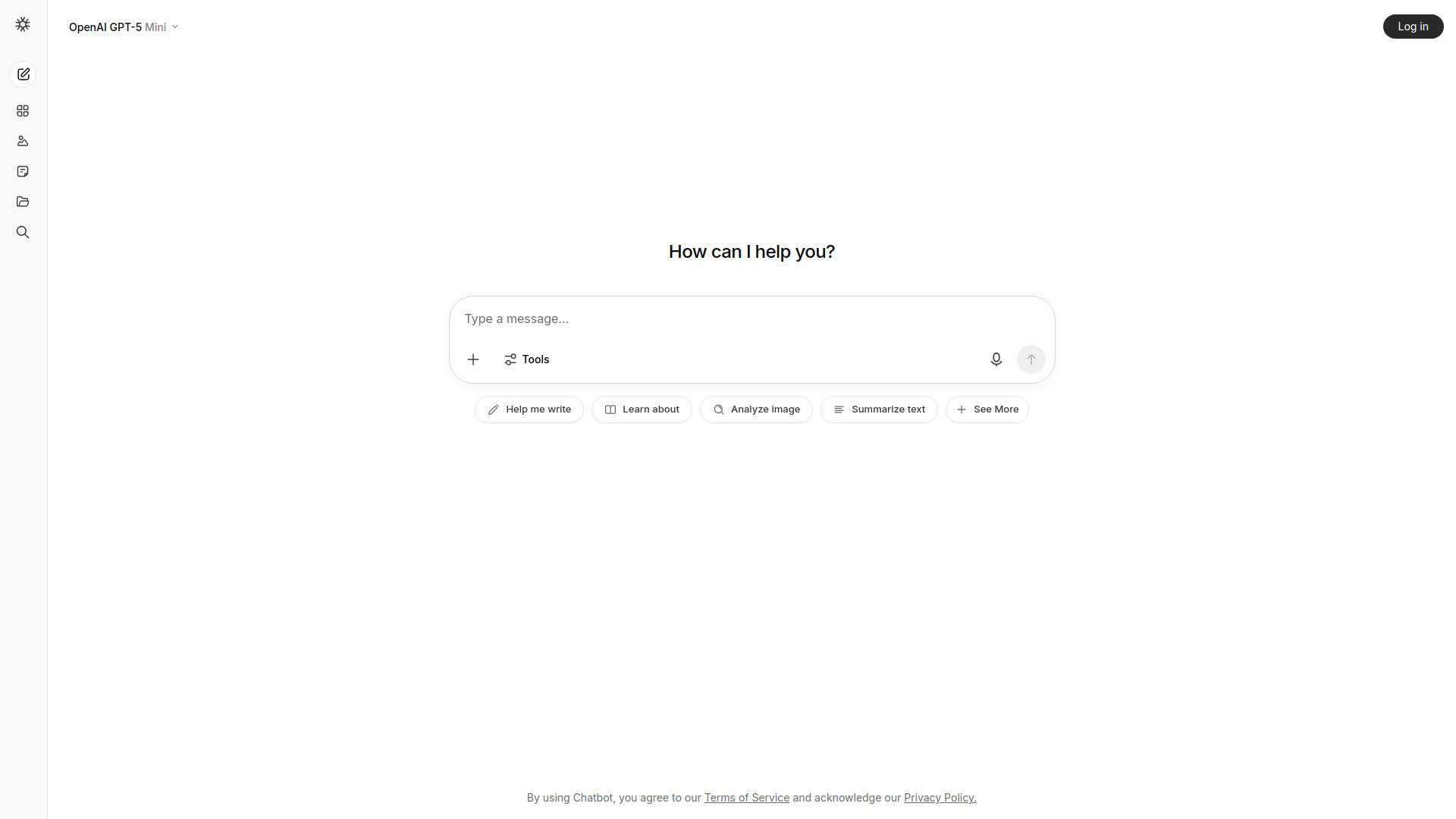
Chatbot App
PaidMulti-Model AI Chat Platform that lets you switch between 30+ leading AI models instantly or run them side by…

iDox.ai Guardrail ✓
Free TrialStop sensitive data leaks to AI tools.