
Identity protection 2026 Rank: #3180
Saviynt ✓
Identity security for AI agents.
Verdict
A quick read before you dig into the full page.
- Best if
- Identity security for AI agents
- Skip if
- Complex interface
- Pick this when
- Continuous visibility
Considering Linx Security instead? Compare side by side
Overview
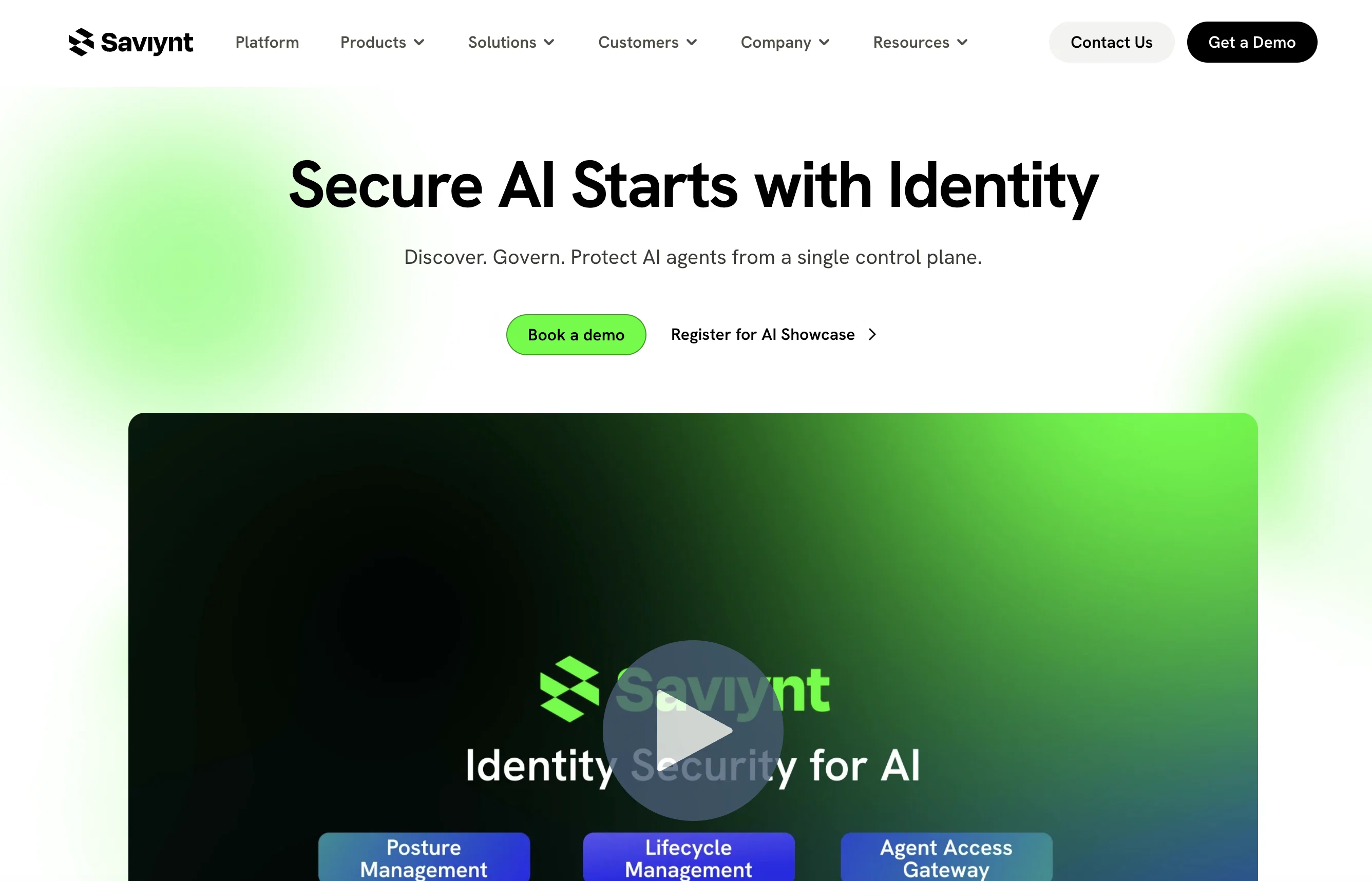
Saviynt Identity Security for AI is a comprehensive system meant to discover, govern, and protect AI agent identities across various environments. The system delivers the identity control plane for AI, providing continuous visibility and lifecycle governance with clear ownership.
Its designed to help organizations reduce emerging attack surfaces while maintaining accountability and compliance as AI adoption scales.This tool offers several features meant to secure AI agents.
Posture Management allows users to identify AI agents, map what these agents can access, and surface access risks to eliminate blind spots. It also delivers actionable risk insights and allows for tracking every AI agent change in a timeline with a clear summary of each change.
In its Lifecycle Management capability, users can register, govern, and track AI agents across their entire lifecycle with options to detect newly added agents effortlessly, surface orphan agents and establish clear accountability through policy-driven ownership assignment.
The Agent Access Gateway feature of the tool verifies agent access requests, continuously authenticating and authorizing agents to enforce zero-trust access at all times.
It provides runtime authorization, detecting whether an agent acts independently or on behalf of a human or another agent.Finally, a Privileged Access Management feature is in the pipeline, aiming to enforce the least privilege for agents, limiting lateral movement by granting agents only time-bound, task-specific access.
It will securely store and rotate credentials to eliminate exposure and prevent agent misuse. Overall, Saviynt Identity Security for AI promises to enhance visibility, control and organization's trust for AI agents.
Access & connections
Where you can use Saviynt, and what it plugs into.
Platforms
Integrations
Capabilities
What this tool accepts, produces, and is strongest at.
Highlights
- Agents
- MCP
Supported features
- Cybersecurity
- Agents
- Assistant
- Automation
- Integrations
- MCP
Pros & cons
Pros
- Continuous visibility
- Lifecycle governance
- Clear ownership accountability
- Reduces attack surfaces
- Posture Management
- Eliminates access blind spots
- Actionable risk insights
- Lifecycle Management
Show 18 more
- Detects newly added agents
- Surfaces orphan agents
- Policy-driven ownership assignment
- Agent Access Gateway
- Verifies agent access requests
- Continuous authentication and authorization
- Enforces zero-trust access
- Runtime authorization
- Detects independent agent actions
- Planned Privileged Access Management
- Enforces least privilege for agents
- Time-bound, task-specific agent access
- Securely stores and rotates credentials
- Prevents agent misuse
- Compliance maintenance
- Behaviour baseline learning
- Agent access map visualization
- Change timeline view
Cons
- No mobile app
- Output verbosity
- No free trial
- Complex interface
- Possibly high learning curve
- Privileged Access Management pending
- Overwhelming amount of features
- Limited language support
Show 2 more
- Incomplete isolation between agents
- Limited on-premise support
Compare alternatives
Similar tools in the catalog.

Linx Security ✓
UnknownAI-native security for every identity, human or not.
No pricing
Full comparison

Silverfort ✓
UnknownDiscover and protect every dimension of identity, everywhere.
No pricing
Full comparison

Releases 1
FAQ 12
What exactly is Saviynt Identity Security for AI?
What is Posture Management in Saviynt and how does it help reduce blind spots?
What is the purpose of the Lifecycle Management feature in Saviynt?
Can Saviynt detect and register newly added AI agents?
What is the Agent Access Gateway in Saviynt?
Does Saviynt provide a history of changes made by AI agents?
Can Saviynt help establish clear accountability for AI agents?
What is the purpose of the Privileged Access Management feature?
How does Saviynt Identity Security for AI enhance trust in the organization?
How does Saviynt help with risk insight for AI agents?
What does Runtime Authorization in the Agent Access Gateway feature do?
Does Saviynt offer capabilities for tracking AI agents throughout their lifecycle?
Related tools
Recommended

EaseUS VoiceWave ✓
PaidChange your voice in real-time for online platforms.

Face ID Search.com ✓
PaidFind anyone by photo in 60 seconds.

Eyematch.ai ✓
PaidFind faces online with AI-powered facial recognition.

FaceFinder ✓
PaidFind anyone by photo with AI-powered face search.

MiniAiLive - Face Liveness Detection ✓
FreeTop Ranked Face Recognition and Liveness Detection

AI or Not ✓
FreemiumDetect AI-generated content in images and audio.