
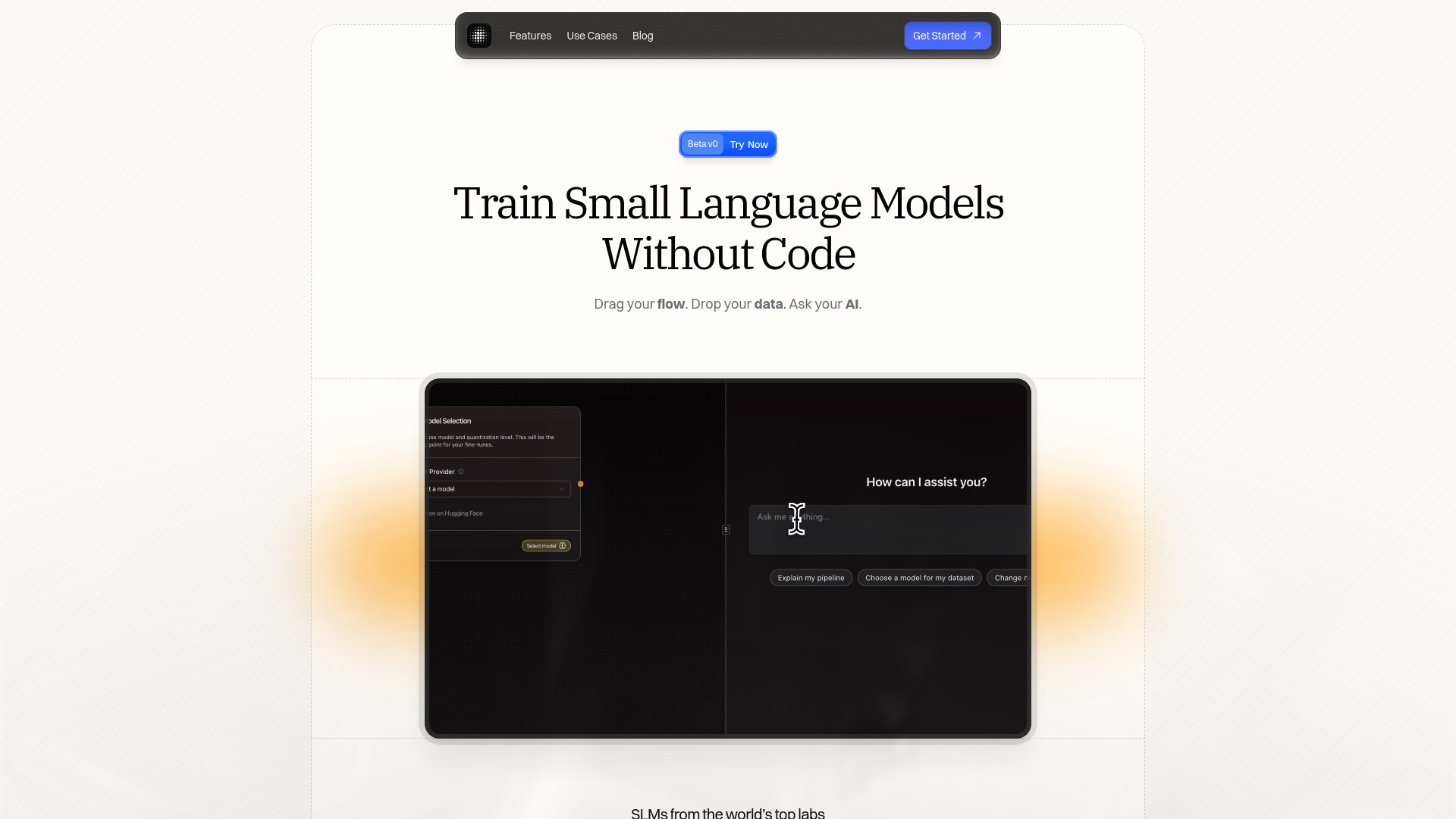
Radal
No-code platform for fine-tuning small language models.
Verdict
A quick read before you dig into the full page.
- Best if
- No-code platform for fine-tuning small language models
- Pick this when
- No-code platform for fine-tuning small language models
Overview
Radal is a no-code platform to fine-tune small language models using your own data. It allows users to connect datasets, configure training visually, and deploy models in minutes. The platform is built for startups, researchers, and enterprises needing custom AI without MLOps complexity.
Access & connections
Where you can use Radal.
Platforms
Capabilities
What this tool accepts, produces, and is strongest at.
Highlights
- No-code visual training flow
- AI Copilot for tailored flow construction
- Hugging Face integration for auto-push
- Export quantized models for local/edge deployment
- One-click training and visual iteration
FAQ 8
What is Radal?
How to use Radal?
What size models can I train with Radal?
Can I use my own base model?
What does the Copilot actually do?
How can I try out my trained model?
Why even build this? Don’t LLMs already do everything?
When can I try it out?
Related tools
Recommended
Chatbot App
PaidMulti-Model AI Chat Platform that lets you switch between 30+ leading AI models instantly or run them side by…

PoYo.AI ✓
FreemiumHigh concurrency. Stable AI API. Better pricing.

SJolt ✓
PaidOne API for all the best AI generation models.
EverMemOS
FreemiumInfinite memory. Persistent identity. Evolving intelligence. EverMemOS, powered by EverMind, is entering beta…