
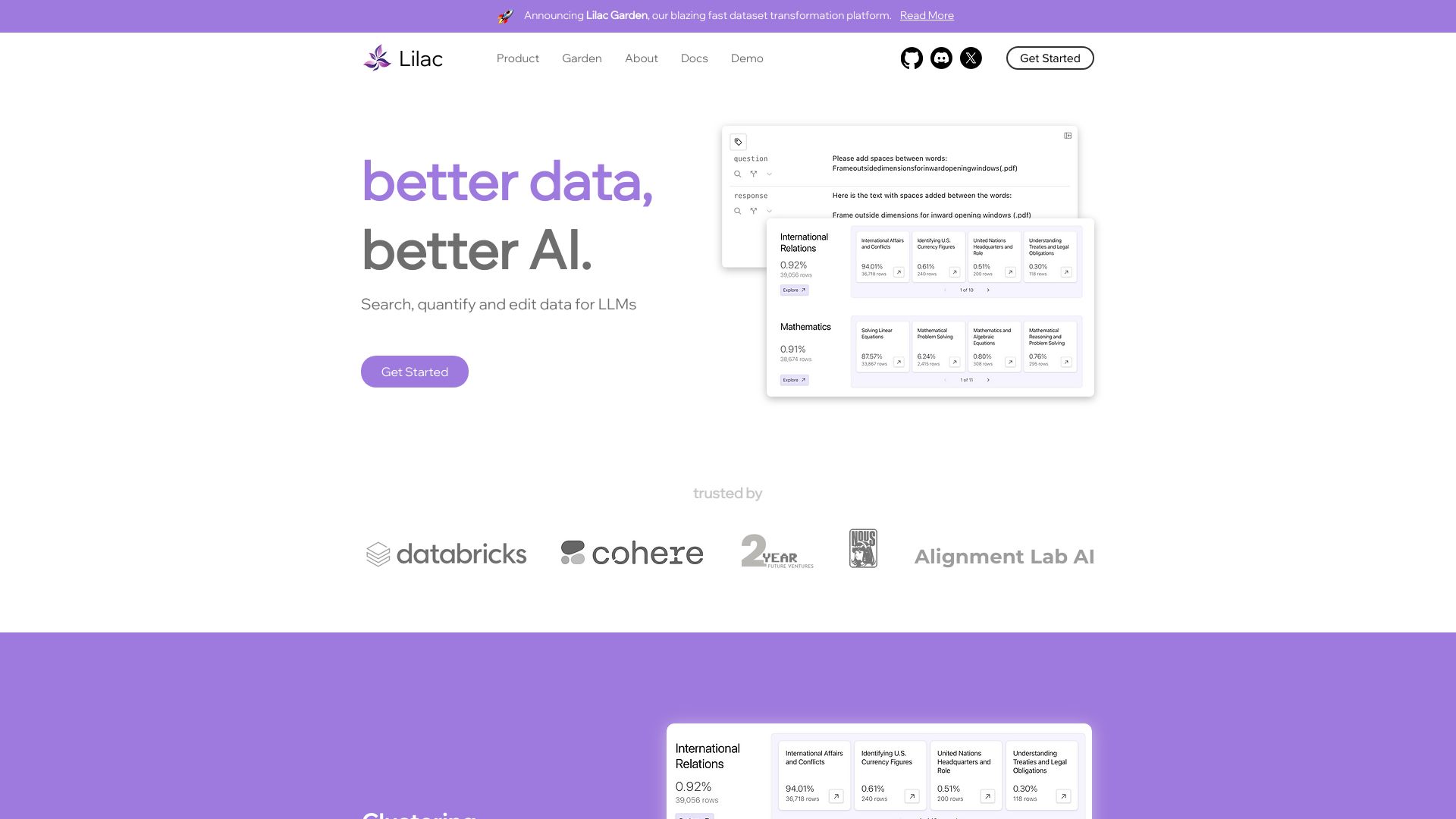
Lilac
Open-source tool for data and AI practitioners to improve data quality for LLMs.
Verdict
A quick read before you dig into the full page.
- Best if
- Open-source tool for data and AI practitioners to improve data quality for LLMs
- Pick this when
- Open-source tool for data and AI practitioners to improve data quality for LLMs
Overview
Lilac is an open-source tool that enables data and AI practitioners to improve their products by improving their data. It allows users to search, quantify, and edit data for LLMs. Lilac provides features like semantic and keyword search, editing and comparing fields, PII detection, duplicate identification, language detection, custom signal integration, and fuzzy-concept search with refinement.
Access & connections
Where you can use Lilac.
Platforms
Capabilities
What this tool accepts, produces, and is strongest at.
Highlights
- Semantic & keyword search
- Edit & compare fields
- PII, duplicates, language detection, or custom signal
- Fuzzy-concept search with refinement
- Blazing fast dataset computations
- Clustering and titling of large datasets
- Embedding datasets at high token rates
- Accelerating data transformations
FAQ 5
What is Lilac?
How to use Lilac?
What is Lilac?
How do I install Lilac?
What are some of the core features of Lilac?
Related tools
Recommended

Raccoon AI ✓
FreemiumThe AI Coworker for Apps, Research, Docs & Everything Else

SocQ
PaidAI-Agent-Ready Social API. Simple. Reliable. Scalable.
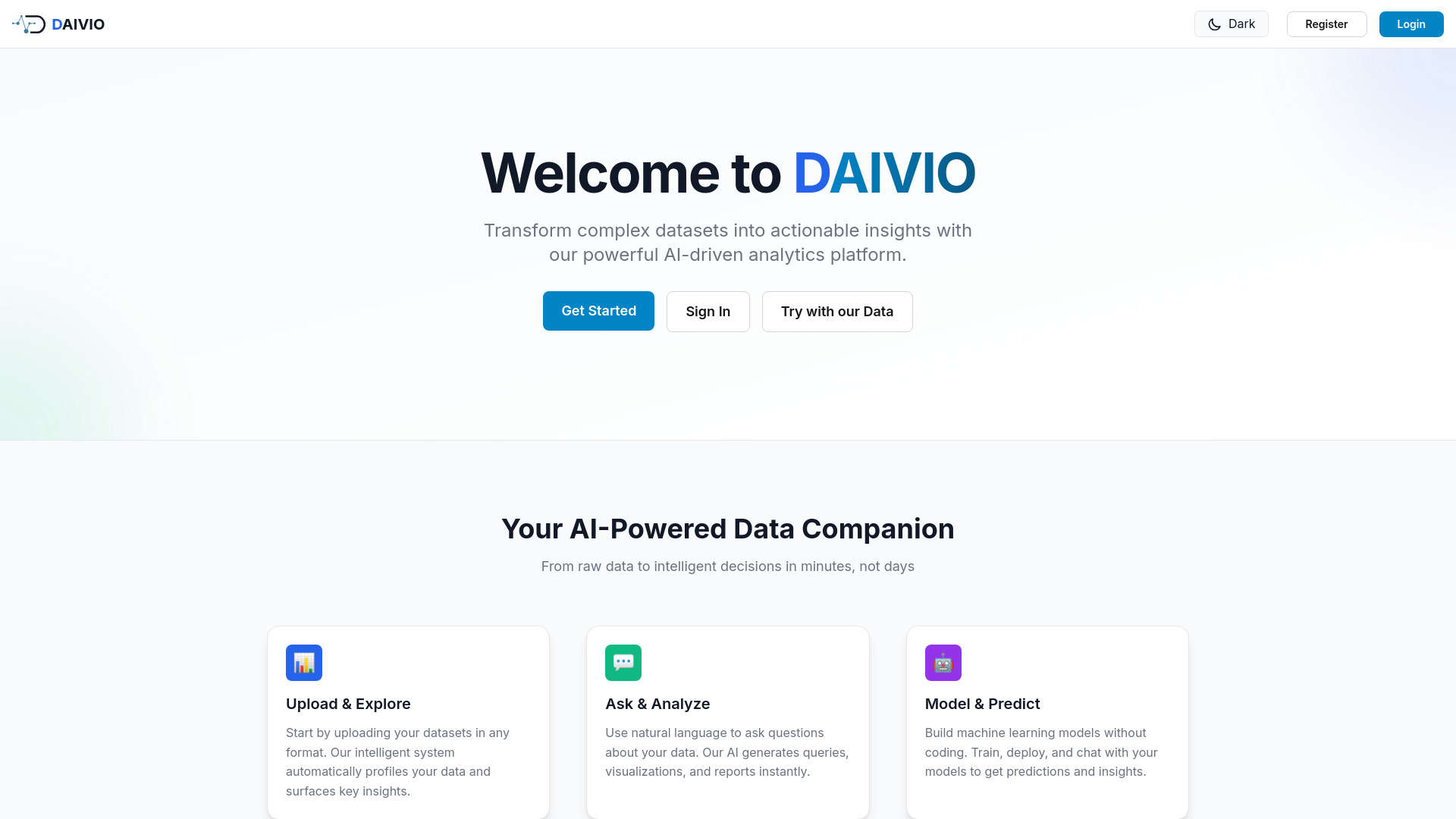
Daivio
UnknownAI-powered analytics platform for data exploration, visualization, and no-code machine learning.

Wondershare Filmora ✓
PaidEdit smarter, faster and easier with Filmora’s powerful AI video tools.