

Langflow ✓
Create AI apps effortlessly with drag-and-drop components.
Verdict
A quick read before you dig into the full page.
- Best if
- Create AI apps effortlessly with drag-and-drop components
- Skip if
- Limited language model customization
- Pick this when
- Effortless prototyping
Considering PixieBrix instead? Compare side by side
Overview
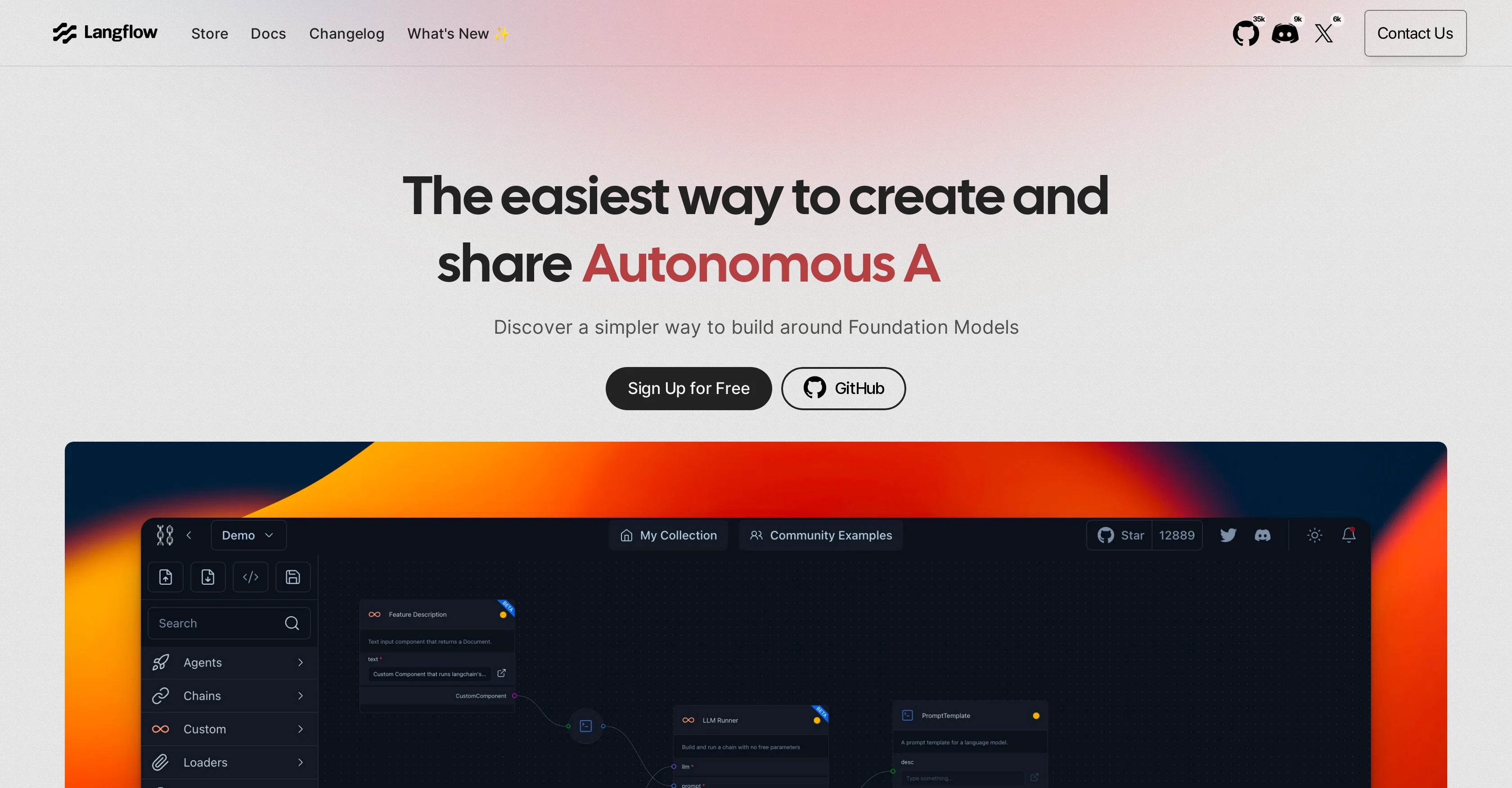
Langflow is an AI tool designed to simplify the creation of AI applications. Primarily a GUI for LangChain, it uses react-flow to support effortless prototyping and experimentation of flows.
Langflow stands out with its drag-and-drop components and a chat box that contribute to a user-friendly interface. It allows users to fine-tune large language models using spreadsheets and introduces dynamic inputs with curly brackets for prompt variables.
Users can assemble higher-level components from AI building blocks and even code their own components for a more custom experience. Additionally, Langflow facilitates the storage and sharing of created flows.
The tool operates as a dynamic graph where every node is an executable unit, encouraging rapid prototyping and flexibility. Langflow is Python-native, a popular language among data scientists, which further enhances its usability by leveraging powerful data manipulation and machine-learning libraries.
It also boasts an extensive range of pre-built composable building blocks that can be combined in various ways to develop unique AI apps. Furthermore, it integrates seamlessly with a broad range of familiar tools and stacks, making it a comprehensive no-code AI ecosystem.
With its emphasis on both simplicity and flexibility, Langflow is helping to redefine the boundaries of AI development.
Access & connections
Where you can use Langflow.
Platforms
Capabilities
What this tool accepts, produces, and is strongest at.
Input
- Text
Output
- Text
Pros & cons
Pros
- Effortless prototyping
- Drag-and-drop components
- User-friendly interface
- Fine-tune models via spreadsheets
- Dynamic inputs for variables
- Assemble higher-level components
- Customize your own components
- Storage and sharing of flows
Show 27 more
- Dynamic graph operation
- Python-native tool
- Comprehensive no-code ecosystem
- Broad tool integration
- Chat box for user interaction
- Prompt variables with curly brackets
- Every node is executable
- Leverages data manipulation libraries
- Leverages machine-learning libraries
- LangChain compatible
- React flow support
- Facilitates rapid prototyping
- Facilitates experimentation
- Extensive component range
- Flexibility in development
- Modular design
- Interactive tool
- Emphasis on simplicity
- Free cloud service
- Endless components
- Tools integration, e.g., Cohere, Bing
- Supports popular data stacks, e.g. Notion
- GitHub integrated
- Strong community support
- Real-time community discussions on Discord
- Open source model
- Active updates on Twitter
Cons
- Requires Python knowledge
- Fine-tuning process not streamlined
- No dedicated mobile interface
- Potential clutter from prebuilt components
- Over-reliance on graphical interface
- Limited language model customization
- Overemphasis on prebuilt solutions
- Doesn't support all coding languages
Show 2 more
- No clear pricing
- Lack of offline functionality
Compare alternatives
Similar tools in the catalog — with a clear reason to open each one.



Unframe AI ✓
UnknownThe Managed AI Delivery Platform
Why look Higher community rating
Full comparison

WebFill ✓
FreemiumFilling forms and emails, solving MCQs, for students and professionals.
Why look Higher community rating
Full comparisonReleases 1
FAQ 12
What is the main function of Langflow?
How does Langflow facilitate the creation of AI applications?
What are the core features of Langflow?
How does the drag-and-drop interface of Langflow work?
How can users fine-tune language models in Langflow using spreadsheets?
How does Langflow allow users to create custom components?
What is the role of dynamic inputs with curly brackets in Langflow?
How is the storage and sharing of created flows facilitated by Langflow?
How does the dynamic graph function in Langflow?
What is the significance of Langflow being Python-native?
What does it mean for Langflow to have an extensive range of pre-built composable building blocks?
How does Langflow integrate with other familiar tools and stacks?
Related tools
Recommended

Agentgpt ✓
FreemiumDeploy autonomous AI Agents effortlessly in your browser.

Thunderbit ✓
FreemiumScrape leads & other data in just 2-clicks.

AI-Flow ✓
PaidConnect multiple AI models easily.

Beam AI ✓
UnknownThe Leading AI Agent Platform.

TeamPal ✓
Free TrialAssemble a tailored AI team without any coding & complexity.

VenturusAI ✓
FreemiumBusiness idea analysis and reporting.