

ICD AI ✓
Predict and recommend ICD-10 codes with AI.
Verdict
A quick read before you dig into the full page.
- Best if
- Predict and recommend ICD-10 codes with AI
- Skip if
- Limited to ICD-10 codes
- Pick this when
- Predictive analytics capability
Considering AI4Docs.AI instead? Compare side by side
Overview
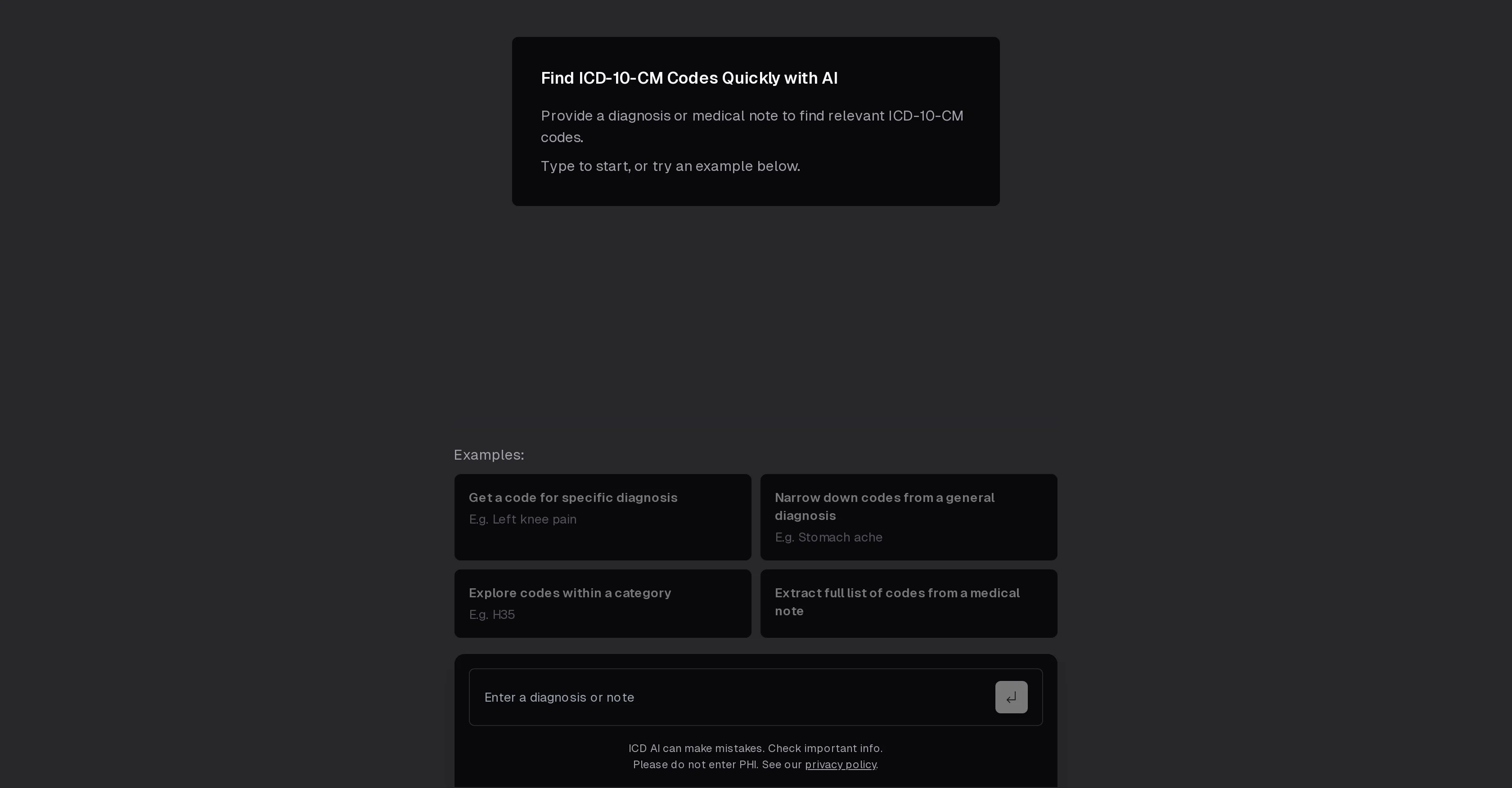
ICD AI is an AI-based system that leverages the capability of predictive analytics and recommendation engines. The tool is primarily designed to predict and offer recommendations for the ICD-10 medical classification codes.
By efficiently predicting these diagnostic codes, the tool aids in facilitating accurate record-keeping and enabling precise medical billing. The system is created with artificial intelligence technology to improve the accuracy of predictions and mitigate the risk of manual errors or misclassified diagnoses.
It essentially aids healthcare providers in identifying the most fitting ICD-10 codes for patient diagnosis, increasing operational efficiency in the delivery of healthcare services.
Besides reducing operational burden, the use of ICD AI further helps healthcare providers adhere to the right compliance regulations in healthcare documentation.
Access & connections
Where you can use ICD AI.
Platforms
Capabilities
What this tool accepts, produces, and is strongest at.
Input
- Text
Output
- Text
Pros & cons
Pros
- Predictive analytics capability
- Efficient ICD-10 recommendation
- Accurate diagnostic code prediction
- Facilitates precise medical billing
- Improves accuracy of predictions
- Reduces manual error risk
- Helps identify fitting diagnoses
- Increases operational efficiency
Show 2 more
- Aids in healthcare compliance
- Reduces operational burden
Cons
- Limited to ICD-10 codes
- No other medical codes supported
- Potential for misclassification still exists
- Doesn't improve actual healthcare service
- Doesn't support other predictive analytics
- No information on user interface
- Lacks integrations with EHR systems
- Inefficient for multi-diagnosis patients
Show 1 more
- Undefined update frequency for codes
Compare alternatives
Similar tools in the catalog — with a clear reason to open each one.

AI4Docs.AI ✓
FreemiumClinical notes that write themselves in 100+ languages
Why look Better for writing
Full comparison
Releases 1
FAQ 12
What is the main function of ICD AI?
How does ICD AI improve the accuracy of ICD-10 code predictions?
Does ICD AI also recommend codes or just predict them?
How does ICD AI assist in accurate record-keeping?
Can ICD AI minimize the risk of manual errors in diagnoses?
Can ICD AI help healthcare providers increase operational efficiency?
Does ICD AI help ensure adherence to compliance regulations in healthcare documentation?
How does ICD AI mitigate the risk of misclassified diagnoses?
Who can benefit from using ICD AI?
What technology underpins the functions of ICD AI?
Does ICD AI improve the efficiency of medical billing processes?
How is ICD AI used for recommending accurate ICD-10 codes?
Related tools
Recommended

BypassGPT.co ✓
PaidHumanize AI text to bypass detection tools.

Stratup.ai ✓
FreemiumInnovative idea generation for businesses.

Business Idea Generator AI ✓
FreeGenerate innovative business ideas with AI

Thea ✓
FreemiumAI study tools to master material, not just memorize it.

AI Signature Generator ✓
FreeCreate personalized eSignatures instantly with AI.

VenturusAI ✓
FreemiumBusiness idea analysis and reporting.