

Agents 2026 Rank: #2245
Chiplab ✓
Give your AI agents virtual hardware to build, test, and simulate on.
Verdict
A quick read before you dig into the full page.
- Best if
- Give your AI agents virtual hardware to build, test, and simulate on
- Skip if
- Limited to firmware testing use cases
- Pick this when
- Board-specific simulation (STM32, nRF52, etc.)
Considering Younet instead? Compare side by side
Overview


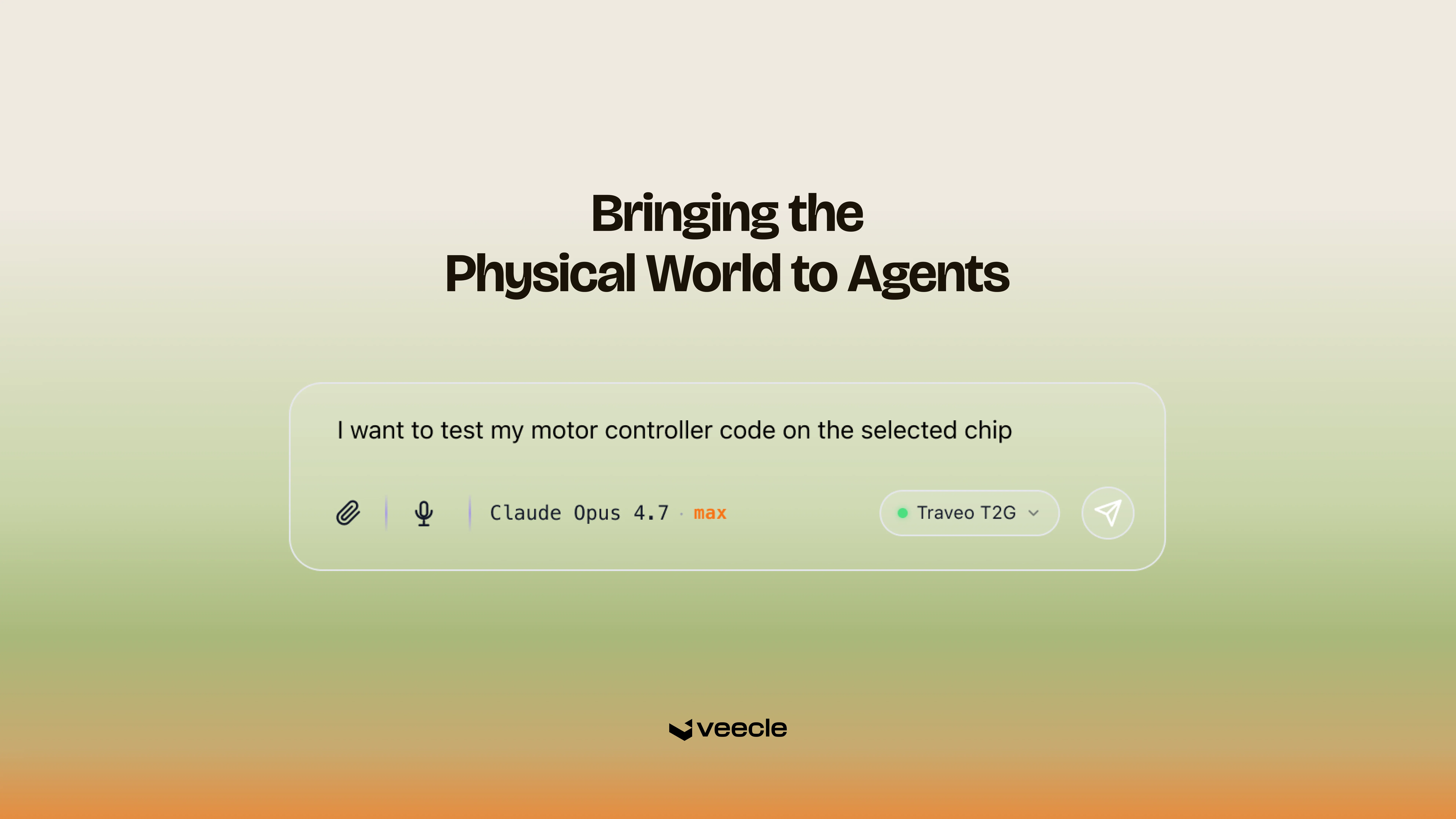
Through a single MCP endpoint, firmware can be compiled against any production toolchain without local installation, tested with unit and integration suites on the virtual hardware, and exercised with injected synthetic sensor data. Any MCP-compatible AI coding tool can call it directly.
Chiplab also improves with use: each test run feeds a shared corpus that future calls can search, returning ranked matches and confidence scores against previously seen chip behavior.
- Mcp
- Claude Mcp Integration
- Cursor Mcp Integration
- Copilot Mcp Server Intergration
Access & connections
Where you can use Chiplab, and what it plugs into.
Platforms
Integrations
Capabilities
What this tool accepts, produces, and is strongest at.
Input
- API
Output
- Code
- API
Highlights
- Agents
- API
- MCP
Supported features
- Agents
- API
- MCP
Pros & cons
Pros
- Board-specific simulation (STM32, nRF52, etc.)
- Run firmware on virtual board
- Virtual silicon instance
- No hardware requirement
- No local toolchain install needed
- Supports Zephyr, Embassy, FreeRTOS, bare-metal
- Ask tool for knowledge queries
- Compile without installing toolchain
Show 4 more
- Peripheral simulation support
- Corpus grows with each run
- Works with Claude Code, Cursor, Copilot
- Works with any MCP-compatible AI tool
Cons
- Limited to firmware testing use cases
- Results depend on target chip model accuracy
- Requires an AI agent to operate
- Needs internet connection
Compare alternatives
Similar tools in the catalog — with a clear reason to open each one.
Younet ✓
Free TrialAI Agent Orchestration and Automation. Build your agentic business.
Free + from $9.99/mo
Full comparison
Agents by Athena AI ✓
Free TrialCreate AI agents for any task
Why look Typically cheaper
Full comparison
Rumora ✓
PaidAI agents will find and mention your brand in viral videos comments
from $249/mo
Full comparison


Releases 1
Imported reviews 1
Which chips does it cover right now? ESP32 and STM32, or a wider list?
FAQ 12
What is Chiplab?
🛠️ 1
tool
🙏 1
karma
wrote:
Chiplab is an MCP (Model Context Protocol) server that helps AI coding agents compile, simulate, and validate firmware on a target chip in a virtual environment — no physical hardware required. It bridges AI agents and silicon, with search across recorded runs, a corpus that grows with use, and synthetic sensor data simulation to support debugging and optimization of embedded systems.
How does Chiplab facilitate firmware testing in a virtual environment?
🛠️ 1
tool
🙏 1
karma
wrote:
Chiplab runs a virtual instance of the actual target silicon, preserving the same binary behavior, peripherals, and interrupt timing as the physical chip. Through this virtual instance, agents can compile against any production toolchain, run unit and integration tests, and inject synthetic sensor data into the running firmware.
What is MCP and how is it utilized in Chiplab?
🛠️ 1
tool
🙏 1
karma
wrote:
MCP stands for Model Context Protocol. It's the standard Chiplab exposes its tools through, letting any MCP-compatible AI agent connect and compile, simulate, and validate firmware virtually — no physical hardware needed.
How does Chiplab work with virtual silicon?
🛠️ 1
tool
🙏 1
karma
wrote:
Chiplab creates a full virtual instance of the target chip — not a generic CPU emulator, but one that preserves the same binary behavior, peripherals, and interrupt timing as the physical board.
What is the role of the API in Chiplab?
🛠️ 1
tool
🙏 1
karma
wrote:
Chiplab exposes its functionality through an MCP endpoint, letting AI agents compile firmware against a production toolchain, run unit and integration tests on virtual hardware, and inject synthetic sensor data — all without installing local tooling.
How can AI agents use Chiplab without physically installing a toolchain?
🛠️ 1
tool
🙏 1
karma
wrote:
Agents send the compiled artifact and target chip info to Chiplab, which compiles or runs it against the right toolchain remotely, returning results directly to the agent — no local toolchain install needed.
How does the process of synthetic sensor data injection work in Chiplab?
🛠️ 1
tool
🙏 1
karma
wrote:
An agent defines a sensor profile and target chip; Chiplab generates synthetic sensor data and injects it into the running simulation, returning firmware I/O behavior, faults, and timing information.
How is Chiplab becoming smarter with each use?
🛠️ 1
tool
🙏 1
karma
wrote:
Each run's events feed into a shared corpus that future runs can draw on, so Chiplab's knowledge base grows with every use. The corpus captures chip behavior and diagnostic patterns — not your source code or any personally identifying information.
What is a shared corpus in the context of Chiplab?
How does the search functionality work in Chiplab?
🛠️ 1
tool
🙏 1
karma
wrote:
Chiplab can search across indexed samples from past runs and return ranked matches with confidence scores, helping diagnose symptoms or chip behavior faster.
What are the ranked matches and confidence scores in Chiplab?
🛠️ 1
tool
🙏 1
karma
wrote:
When an agent queries a symptom or chip behavior, Chiplab returns matches from the corpus ranked by relevance, each with a confidence score indicating how closely it matches.
How does Chiplab assist in debugging and optimization of embedded systems?
🛠️ 1
tool
🙏 1
karma
wrote:
Chiplab lets agents compile, test, and simulate firmware on a virtual chip, returning a verdict and trace so agents can debug quickly. The growing corpus adds searchable context from past runs to support optimization decisions.
Related tools
Recommended

GetLogit ✓
FreemiumArtificial intelligence, available for everyone.

ChatGPT ✓
FreemiumAsk anything, create anything, and move from idea to action.

DeepSeek ✓
FreeUnravel the mystery of AGI with curiosity

Gemini ✓
FreemiumGemini: Google's most capable AI model yet

Grok ✓
FreemiumConversational AI for understanding the universe.

agenthost.space ✓
FreemiumYour AI agents keep working. You stay in control.