

Shakespeare ✓
The Only Fully Open Source & Decentralized AI Web Builder
Verdict
A quick read before you dig into the full page.
- Best if
- The Only Fully Open Source & Decentralized AI Web Builder
- Skip if
- Complex projects may require coding knowledge
- Pick this when
- Runs in the web: any browser, any device
Considering Whacka instead? Compare side by side
Overview


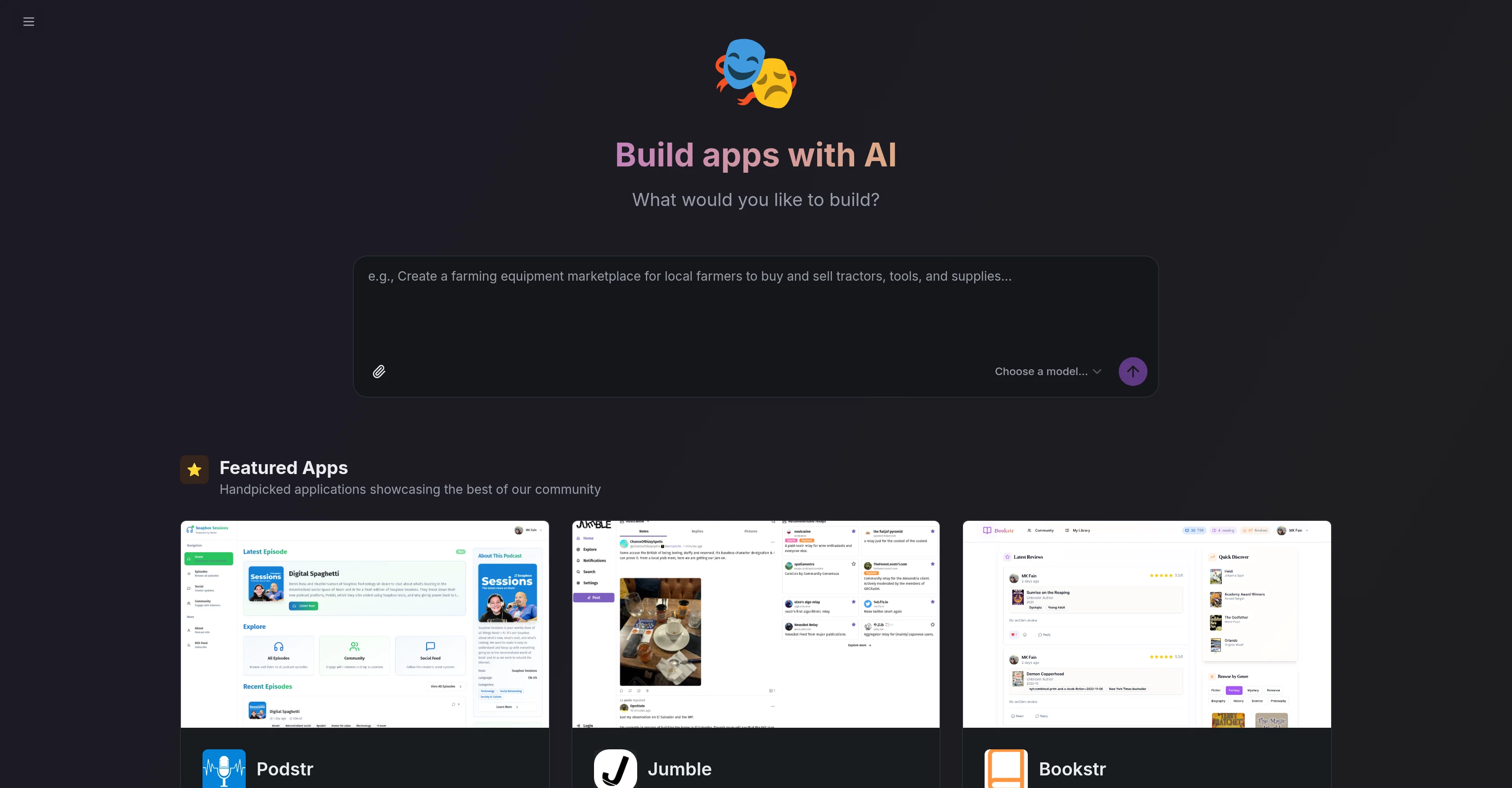
Just tell Shakespeare what website you want to build, and watch it create professional sites. No coding required, but full code access when you want it.
Break free from vendor lock-in. Choose from dozens of AI providers including OpenRouter, PayperQ, Z.ai, OpenAI, Anthropic, xAI, and even local models.
Files are stored locally on your computer, not on our servers. This means complete control, instant access, and true data sovereignty.
Track changes, roll back to previous states, and collaborate seamlessly with GitHub, GitLab, or any Git provider. Professional version control built right in.
Import projects directly from Git repositories and encourage others to contribute with an "Edit with Shakespeare" badge. Perfect for open source collaboration.
Built-in file explorer and code editor let you view and edit every file by hand. Upload your own images, logos, and assets directly into your project.
Access & connections
Where you can use Shakespeare, and what it plugs into.
Platforms
Capabilities
What this tool accepts, produces, and is strongest at.
Input
- API
- Code
- Text
Output
- Code
- Text
Highlights
- API
- MCP
- No Signup
Supported features
- API
- MCP
- No Signup
Pros & cons
Pros
- Open source
- Runs in the web: any browser, any device
- Decentralized (Nostr-native)
- Runs locally (no data shared)
- No coding required
- Full code access
- No vendor lock-in
- Built-in version control with git
Show 9 more
- Use any AI provider
- Use any AI model, including local LLMs
- Build open source applications
- Build on decentralized protocol, Nostr
- Build web applications
- Deploy for free
- Made for different skill levels
- Choose what you want to pay based on LLM
- Actively being developed and improved
Cons
- Only builds certain projects (must run in web)
- Complex projects may require coding knowledge
- High-quality LLMs like Claude Sonnet can be expensive
- Front-end applications only (no building back-ends)
- Does not support LLM image processing
Compare alternatives
Similar tools in the catalog — with a clear reason to open each one.


AppDeploy ✓
FreeDeploy real apps directly from ChatGPT or Claude
Why look Fully free option
Full comparison
Anything - AI App Builder ✓
FreemiumTurn your words into apps, sites, and products.
Free + from $16/mo
Full comparison


Releases 1
Imported reviews 1
I love that Shakespeare is totally open source and fully focused on allowing users to build with freedom, rather than just another AI SaaS trying to lock users into a subscription tier. You can use it with any other AI provider, or pay as you go for credits with Shakespeare's default AI. It's really easy to talk to the app, build a first draft, and deploy. I also like how you can edit other open source projects and improve them. Really cool tool for people who want to build with AI but care about open source and freedom.
FAQ 12
What is Shakespeare - Open Source AI Builder?
How can Shakespeare assist in the creation of custom applications?
How does Shakespeare allow developers to embed intelligence into their applications?
Can Shakespeare be utilized without prior AI or machine learning expertise?
What types of applications can be developed using Shakespeare?
How does Shakespeare make AI accessible to a wider audience?
How does Shakespeare leverage the power of AI for application development?
What should users be aware of with the constantly evolving nature of AI?
How does the scalability of projects affect Shakespeare's functionality?
In which ways can developers with different skill levels utilize Shakespeare?
What AI functions can be integrated into applications using Shakespeare?
Can Shakespeare be used to build personal AI assistants?
Related tools
Recommended

DeepSeek ✓
FreeUnravel the mystery of AGI with curiosity
remio: Your Personal ChatGPT ✓
FreemiumGet Tailored Answer with Your Personal ChatGPT

Landing-Page.io ✓
FreemiumBuild stunning AI landing pages instantly.

Base44 ✓
FreemiumLet’s make your dream a reality. Right now.

OnSpace.AI - No Code App Builder ✓
FreemiumBuild Apps with AI, No Code

Evalyze ✓
FreemiumAI automates startup fundraising from pitch deck to investor match.