
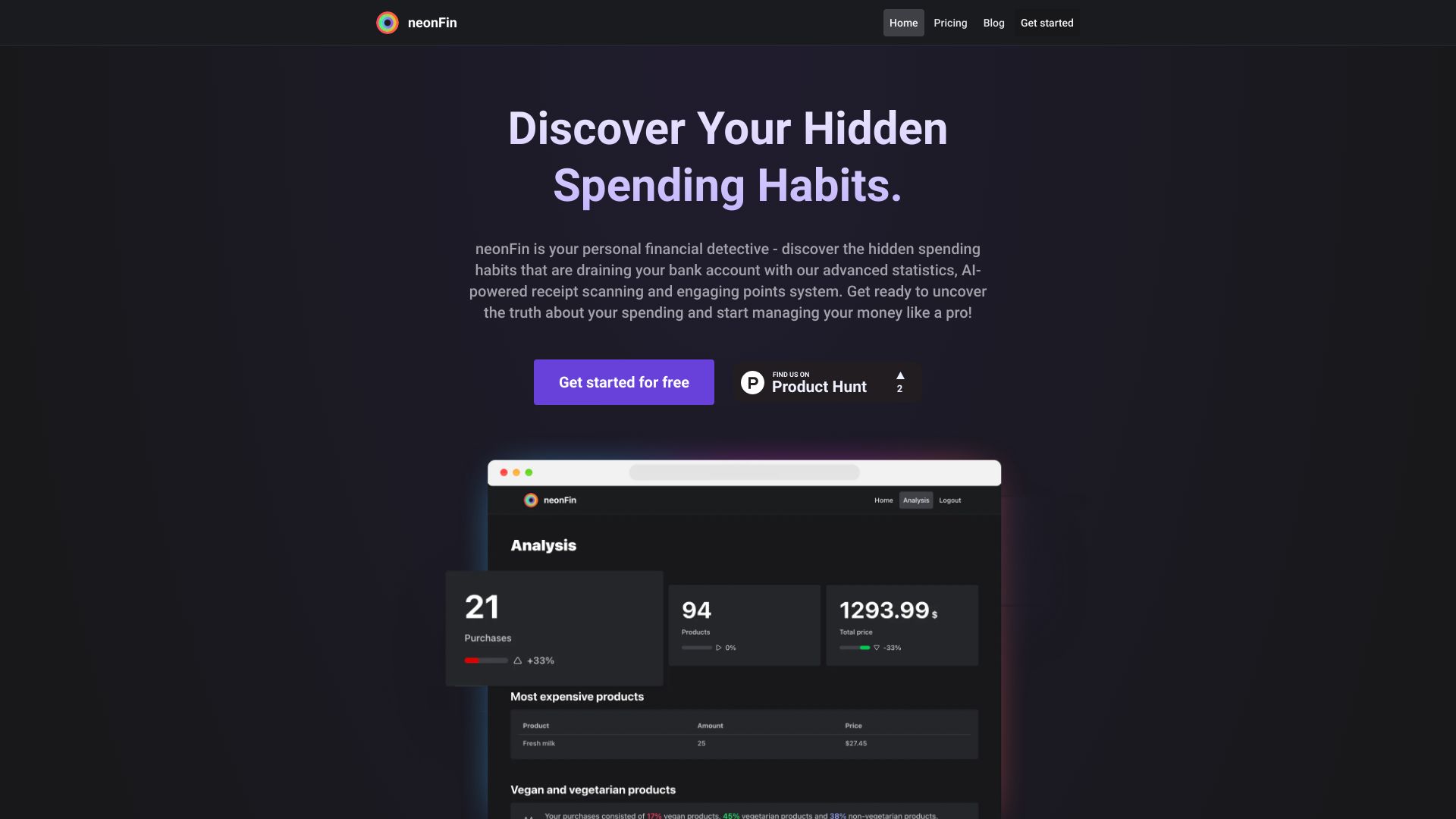
neonFin
NeonFin is a budget app with financial calculators and expense tracking.
Source rating 5.0
(75)
0 views
0 saves
Paid
4.99$
Verdict
A quick read before you dig into the full page.
- Best if
- NeonFin is a budget app with financial calculators and expense tracking
- Skip if
- You need a free plan with no credit card
- Pick this when
- Paid · 4.99$
Overview
NeonFin is a budget book app and smart financial calculator suite designed to help users take control of their finances. It offers tools for tracking expenses, analyzing spending patterns, and making informed financial decisions. Features include AI-powered receipt scanning, expense tracking, income analysis, and a variety of financial calculators.
Access & connections
Where you can use neonFin.
Platforms
Capabilities
What this tool accepts, produces, and is strongest at.
Highlights
- Budget Calculators
- Expense Tracking
- Income Analysis
- Financial Calculators
- AI-powered receipt scanning
FAQ 5
What is NeonFin?
NeonFin is a budget book app and smart financial calculator suite designed to help users take control of their finances. It offers tools for tracking expenses, analyzing spending patterns, and making informed financial decisions. Features include AI-powered receipt scanning, expense tracking, income analysis, and a variety of financial calculators.
How to use NeonFin?
Use NeonFin to track your spending habits, calculate your budget, and explore financial calculators. The app helps you understand your financial DNA, allocate your budget strategically, and implement advanced financial planning strategies.
What are the core spending categories?
The core spending categories include Fixed Expenses (Housing, Utilities, Insurance, Basic phone plan, Essential subscriptions), Variable Necessities (Groceries, Transportation, Healthcare, Personal care, Clothing), Debt Obligations (Credit card payments, Student loans, Personal loans, Car payments), and Discretionary Spending (Entertainment, Dining out, Shopping, Hobbies, Travel).
What are some strategic budget allocation recommendations?
Recommended budget allocations include Essential Living Expenses (50-60%), Financial Goals and Savings (20-30%), with specific allocations for Housing, Utilities, Transportation, Food and Groceries, Emergency Fund, Retirement, and Other Financial Goals.
What are the stages of emergency fund development?
The stages include Stage 1: Initial Safety Net (Save $1,000), Stage 2: Fund Building (Calculate monthly expenses, set 3-6 months expenses as target), and Stage 3: Maintenance (Regular review and adjustment).
Related tools
Recommended

neonFin
4.99$