
Asymmetric Data
Keyword clustering tool for data-driven content strategy.
Source rating 5.0
(97)
1.7k views
1.7k/mo traffic
0 saves
Paid
From $4 per 1,000 keywords
Verdict
A quick read before you dig into the full page.
- Best if
- Keyword clustering tool for data-driven content strategy
- Skip if
- You need a free plan with no credit card
- Pick this when
- Paid · From $4 per 1,000 keywords
Overview
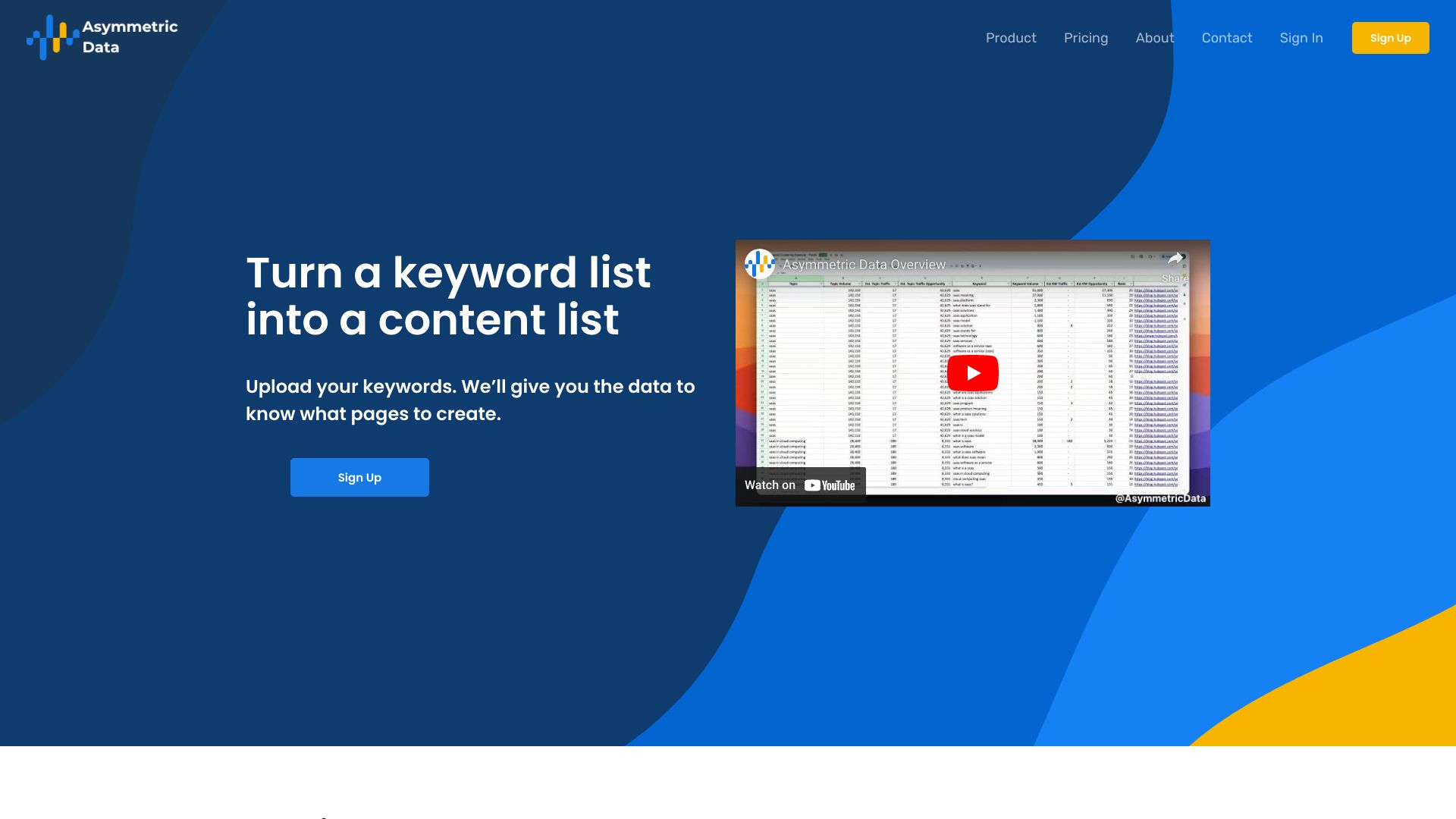
Asymmetric Data is a keyword clustering tool that groups keywords together based on their meaning. It analyzes Google's search results pages to identify keywords with common URLs, indicating they can be targeted on the same content page. The tool helps users transform keyword lists into actionable content lists, saving time and improving content strategy.
Access & connections
Where you can use Asymmetric Data.
Platforms
Capabilities
What this tool accepts, produces, and is strongest at.
Highlights
- Keyword clustering based on SERP overlap
- Actionable content list generation
- Rank, estimated traffic, and opportunity analysis
FAQ 5
What is Asymmetric Data?
Asymmetric Data is a keyword clustering tool that groups keywords together based on their meaning. It analyzes Google's search results pages to identify keywords with common URLs, indicating they can be targeted on the same content page. The tool helps users transform keyword lists into actionable content lists, saving time and improving content strategy.
How to use Asymmetric Data?
Users upload a list of keywords to Asymmetric Data. The tool then analyzes the keywords and groups them into clusters, providing a spreadsheet with suggested articles for effective targeting.
How does Asymmetric Data cluster keywords?
Asymmetric Data clusters keywords by analyzing Google's search results pages (SERPs) for each term. When keywords share several URLs in common, the tool identifies them as semantically related and groups them together.
What kind of output does Asymmetric Data provide?
Asymmetric Data provides a spreadsheet that groups keywords into suggested articles, along with data on rank, estimated traffic, and opportunity for each keyword.
What languages and countries does Asymmetric Data support?
Asymmetric Data supports keyword clustering in most languages and countries. A full list of supported locations and languages is available on their website.
Related tools
Recommended

Asymmetric Data
From $4 per 1,000 keywords