

Alokai ✓
The all-in-one frontend platform for enterprise commerce.
Verdict
A quick read before you dig into the full page.
- Best if
- The all-in-one frontend platform for enterprise commerce
- Skip if
- Extensive platform, potentially complex
- Pick this when
- End-to-end frontend platform
Considering Runner AI instead? Compare side by side
Overview
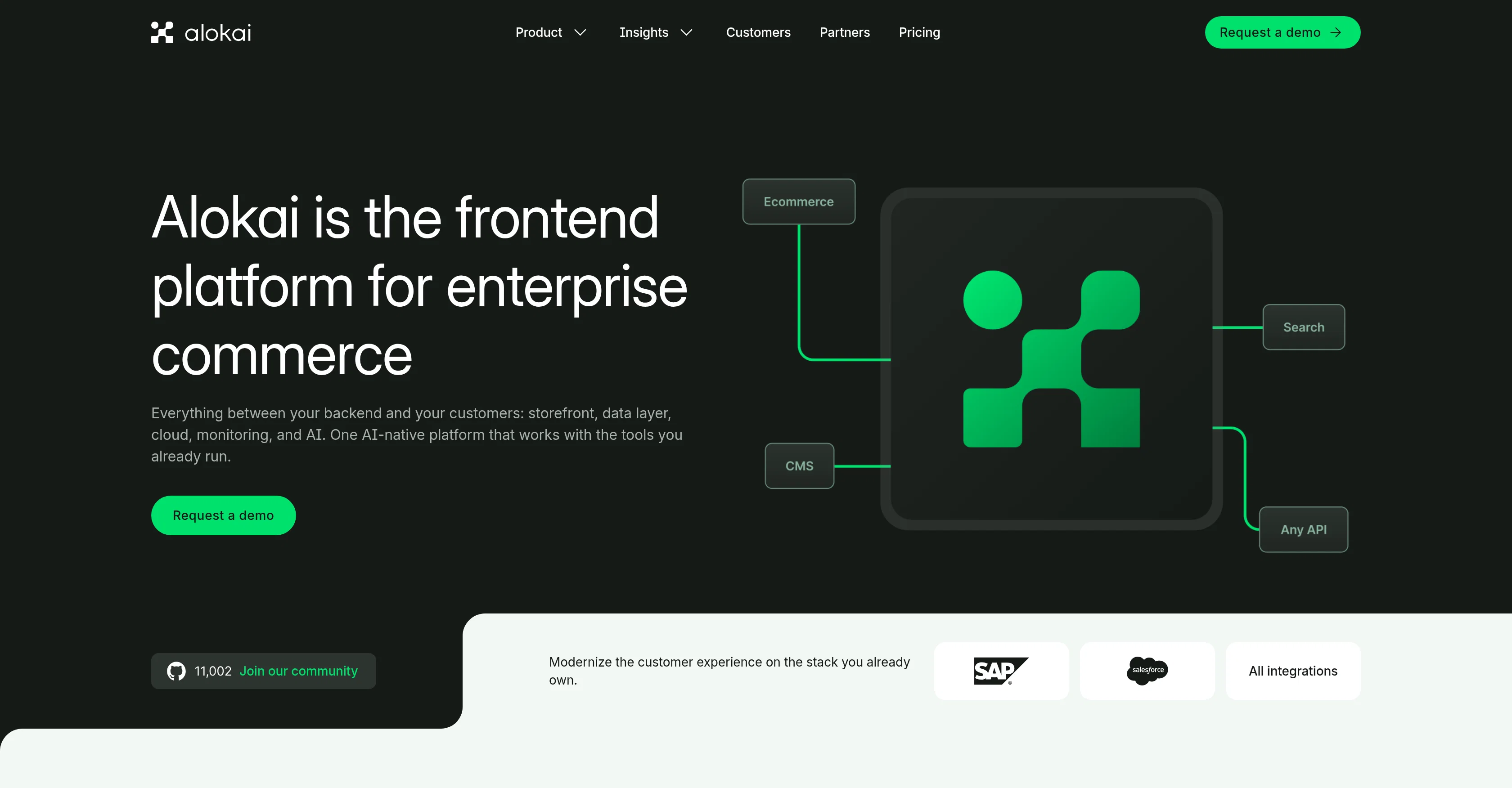
Alokai, previously known as Vue Storefront, is an end-to-end frontend platform designed for enterprise commerce. It encompasses a range of features that include storefront, data layer, cloud, monitoring, and built-in AI, which are integrated seamlessly into one platform.
Alokai aids in modernizing the customer experience on any existing tech stack.The platform addresses common issues in enterprise teams like slow updates due to legacy stacks or repeated feature building for multi-store or multi-brand setups.
It offers the convenience of maintaining a single codebase across different brands and leverages a modern React or Vue stack along with AI-assisted development.Alokai's AI capabilities not only amplify the conversion rates but also operate on the existing storefront, concentrating on discernible metrics.
This helps in avoiding the need for extensive replatforming. The AI tool is notable for adapting the store to each shopper, assisting them from product discovery to checkout.
It operates within the standard shopping flow, ensuring a connected shopping experience.Alokai's backend for frontend provides one interface for the backend, CMS, and search, streamlining the switching process to a configuration change without necessitating a complete rebuild.
Moreover, Alokai integrates monitoring and deployment tools, revenue optimization analytics, and managed infrastructure services, allowing for efficient and streamlined operations.Alokai is also distinguished by its 'AI-Native Storefront' feature, where one intelligence layer runs the entire shopping experience.
This results in a more personalized and efficient shopping experience for customers, as the AI adapts to the customer's needs and preferences. The AI coding tools are designed with context-sensitivity, which allows the generated code to fit neatly into the existing architecture without creating technical debt.
Access & connections
Where you can use Alokai.
Platforms
Capabilities
What this tool accepts, produces, and is strongest at.
Input
- Tabular
Output
- Text
Pros & cons
Pros
- End-to-end frontend platform
- Integrated data layer
- Cloud-based
- Monitoring capabilities
- Eliminates slow updates
- Single codebase management
- Supports React and Vue
- Enhances conversion rates
Show 35 more
- Avoids major replatforming
- Tailors shopping to shopper
- Optimized shopping flow
- Unified interface for backend
- CMS integration
- Search Engine Optimization
- Revenue Optimization Analytics
- Managed infrastructure services
- Personalized customer experience
- Automated product discovery
- Backend for frontend feature
- Streamlined configuration change
- Customized to shopper preferences
- Built-in deployment tools
- Flexible with existing tech
- Avoids technical debt creation
- Efficient operations focus
- Compatibility with multiple brands
- Multistore setup capabilities
- Maintains backend credentials security
- Improves page loading speed
- Automatic problem detection
- Performance leak location
- Ready-made fix provision
- Assured 99.9% SLA
- Adaptable to existing frontends
- Various vendor integrations
- Composable commerce solution
- Detailed product documentation
- Live and webinars events
- Pre-set storefront audits
- Readily available assistance
- Automated ordering process
- Fast development speed
- Multi-brand single codebase
Cons
- React or Vue only
- Needs existing tech stack
- No native chat support
- Limited integrations
- Assumes single codebase
- Difficult legacy integration
- Highly personalized approach risk
- Extensive platform, potentially complex
Show 1 more
- Dependent on managed infrastructure
Compare alternatives
Similar tools in the catalog — with a clear reason to open each one.

Runner AI ✓
Free TrialBuild your entire e-commerce store with AI prompts.
Free + from $23/mo
Full comparison
Stable Commerce ✓
FreemiumThe AI agent that Creates and Manages your eCommerce Store
Why look Higher community rating
Full comparison
Shopify Sidekick ✓
Free TrialBoost your business with AI-powered commerce tools
Why look Higher community rating
Full comparison


Releases 1
FAQ 12
What is Alokai and its main purpose?
How does Alokai improve the shopping experience?
Is Alokai designed for multi-brand or multi-store setups?
What kind of tech stack does Alokai use?
How does Alokai use AI to improve conversion rates?
What features of Alokai avoid the need for extensive replatforming?
How does Alokai personalize the shopping experience?
What does Backend for Frontend in Alokai mean?
How does Alokai help to streamline operations?
How is context-sensitivity used in Alokai's AI coding tools?
Can Alokai operate on the existing storefront?
What are the revenue optimization features in Alokai?
Related tools
Recommended

Macaly ✓
FreemiumAI website builder with built-in database, hosting & more

AI Magicx ✓
FreemiumAI-enhanced content, code, and e-commerce optimization.

AI Website Builder | Hostinger ✓
FreemiumCreate stunning websites instantly with AI.

PixExtender ✓
Free TrialExpand images to your custom size up to 4096 pixels.

Knowster ✓
FreemiumYour website answers questions while you sleep.

MakeAD ✓
Free TrialStudio-quality product photos, generated by AI.